
GENNY
Genny Spring Summer 2027
THE QUEEN OF THE DESERT
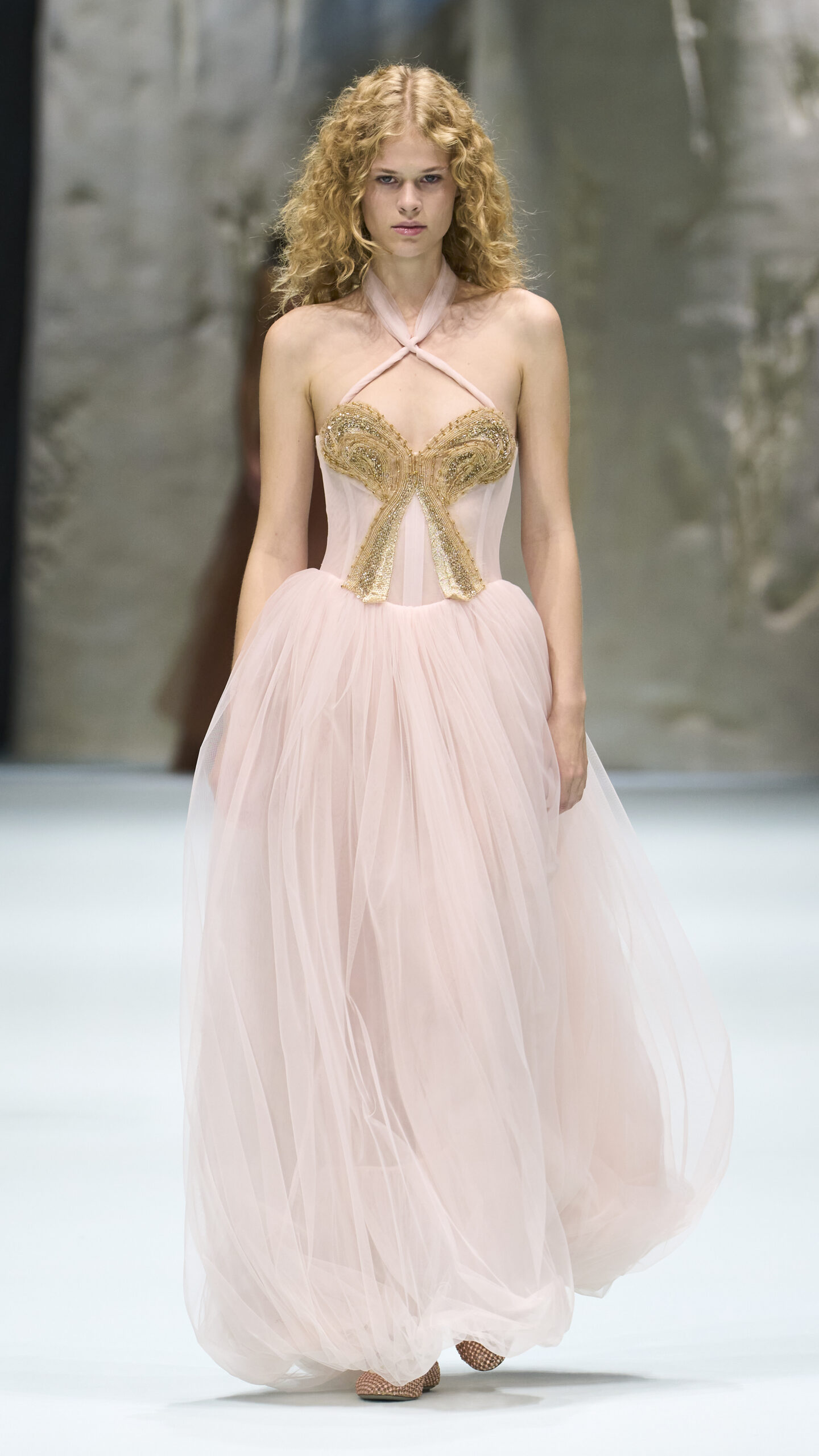
For Spring Summer 2027, Sara Cavazza Facchini envisions the desert for Genny as an oneiric landscape: a place where the animal, vegetal and mineral worlds meet, becoming a metaphor for a contemporary femininity that is resilient and rich in nuances.
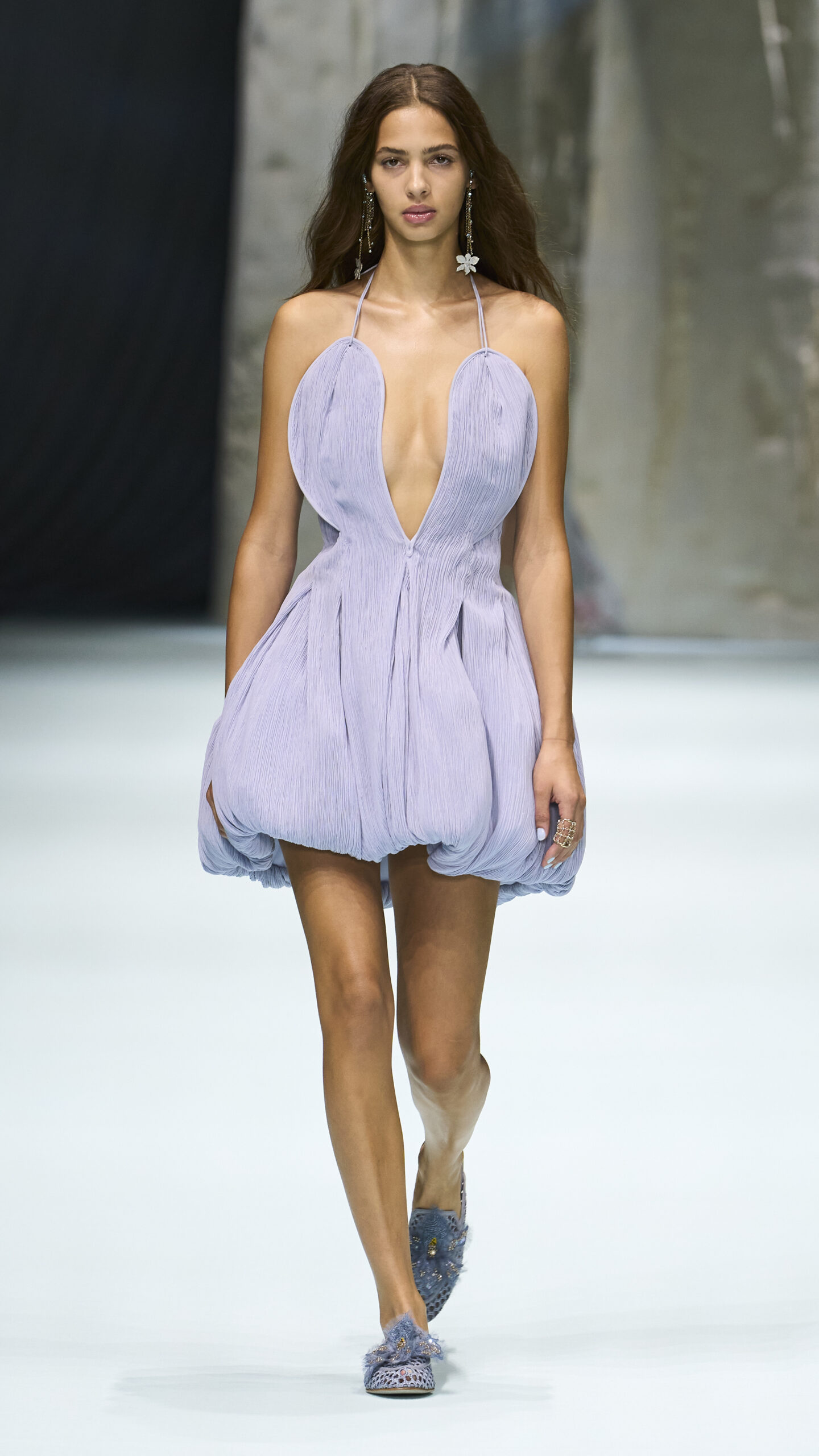
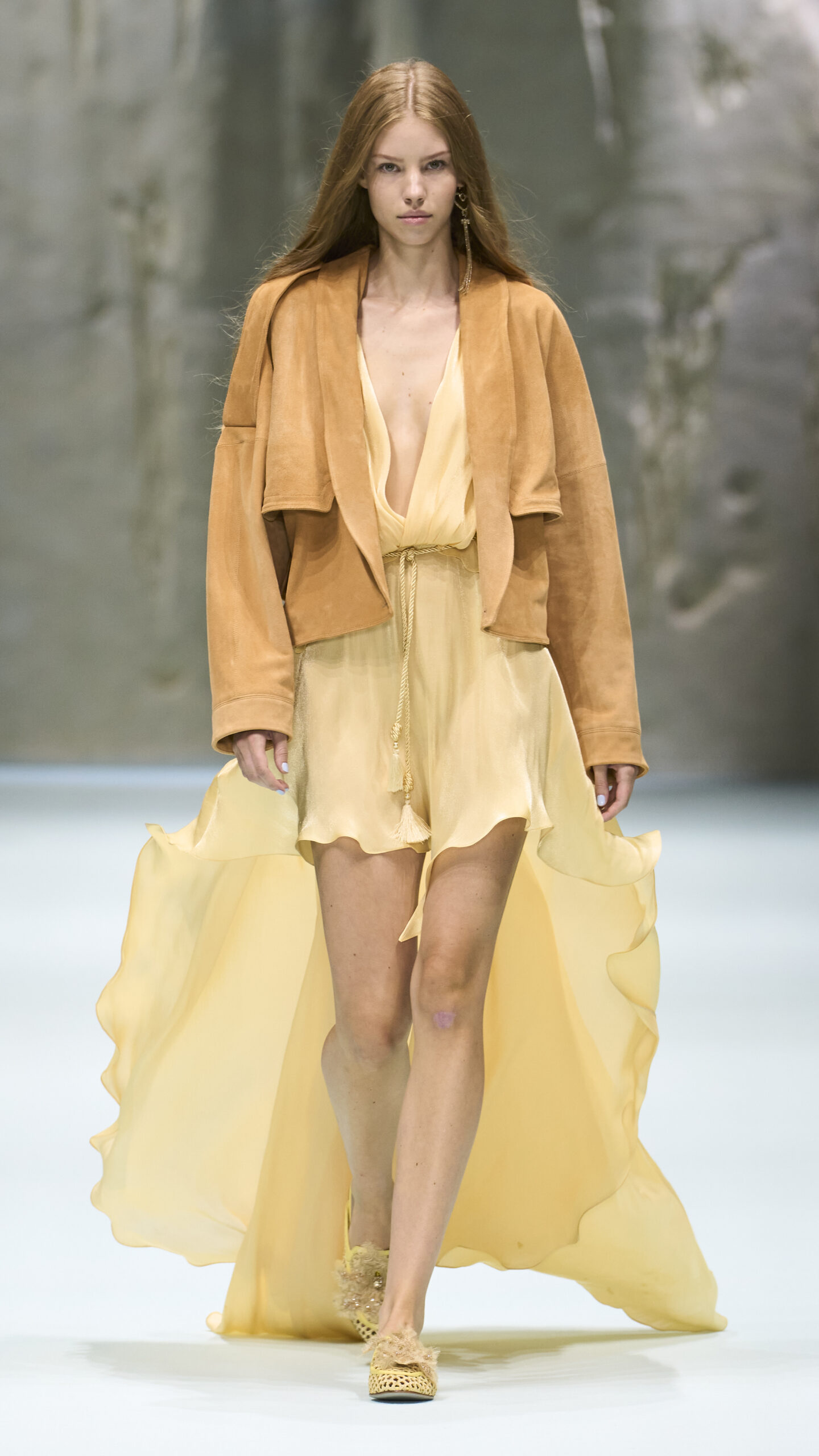
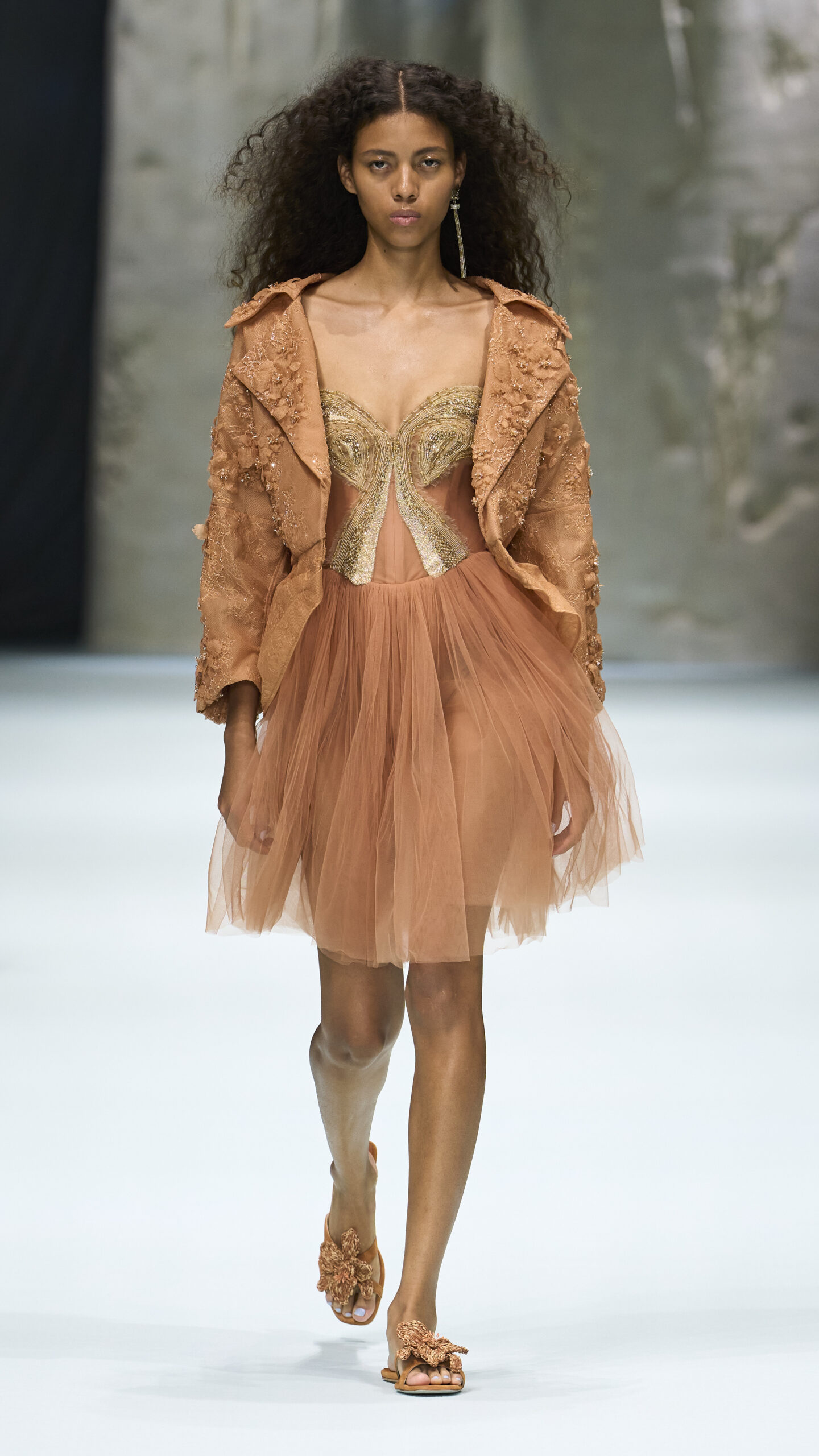
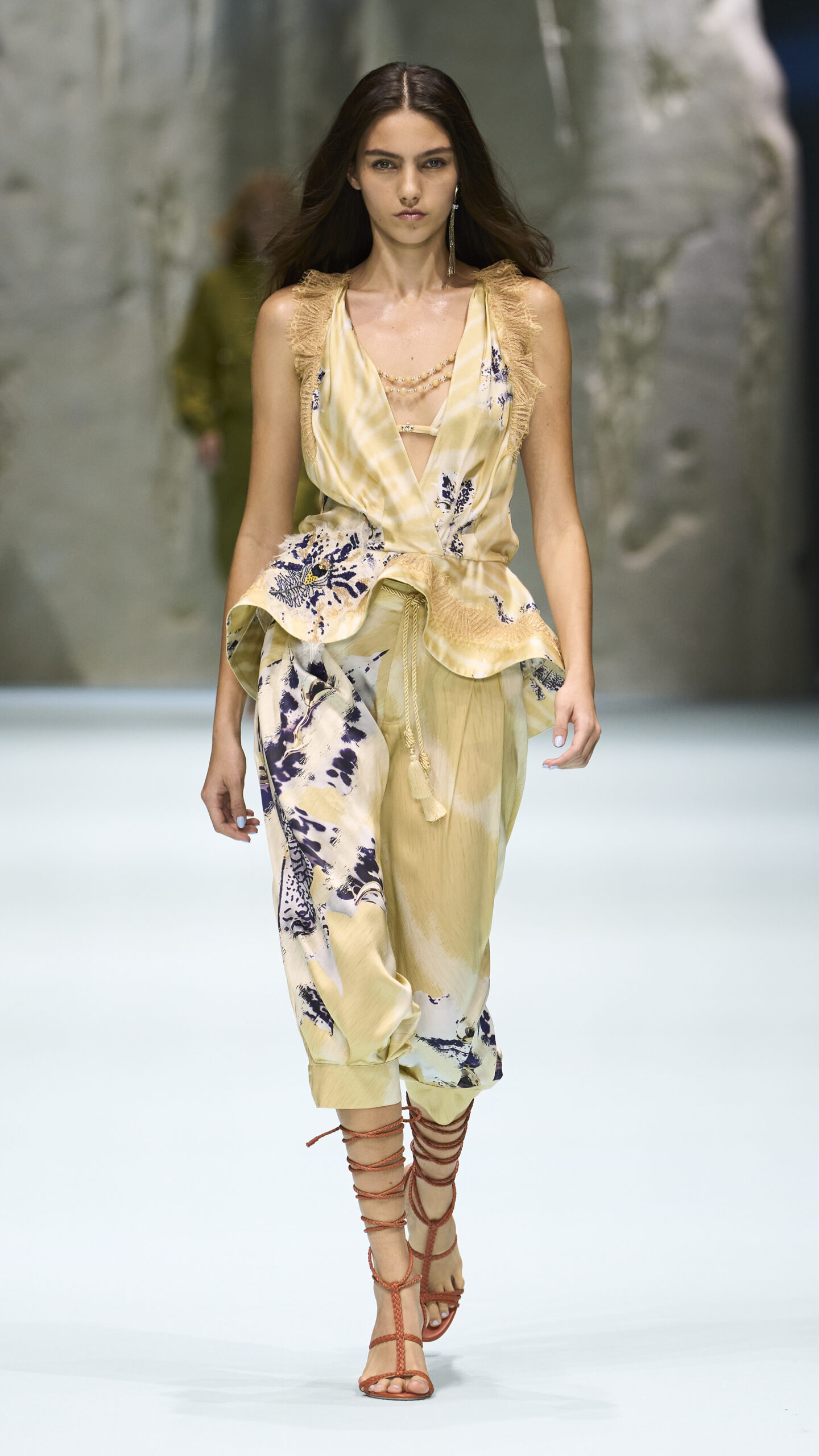
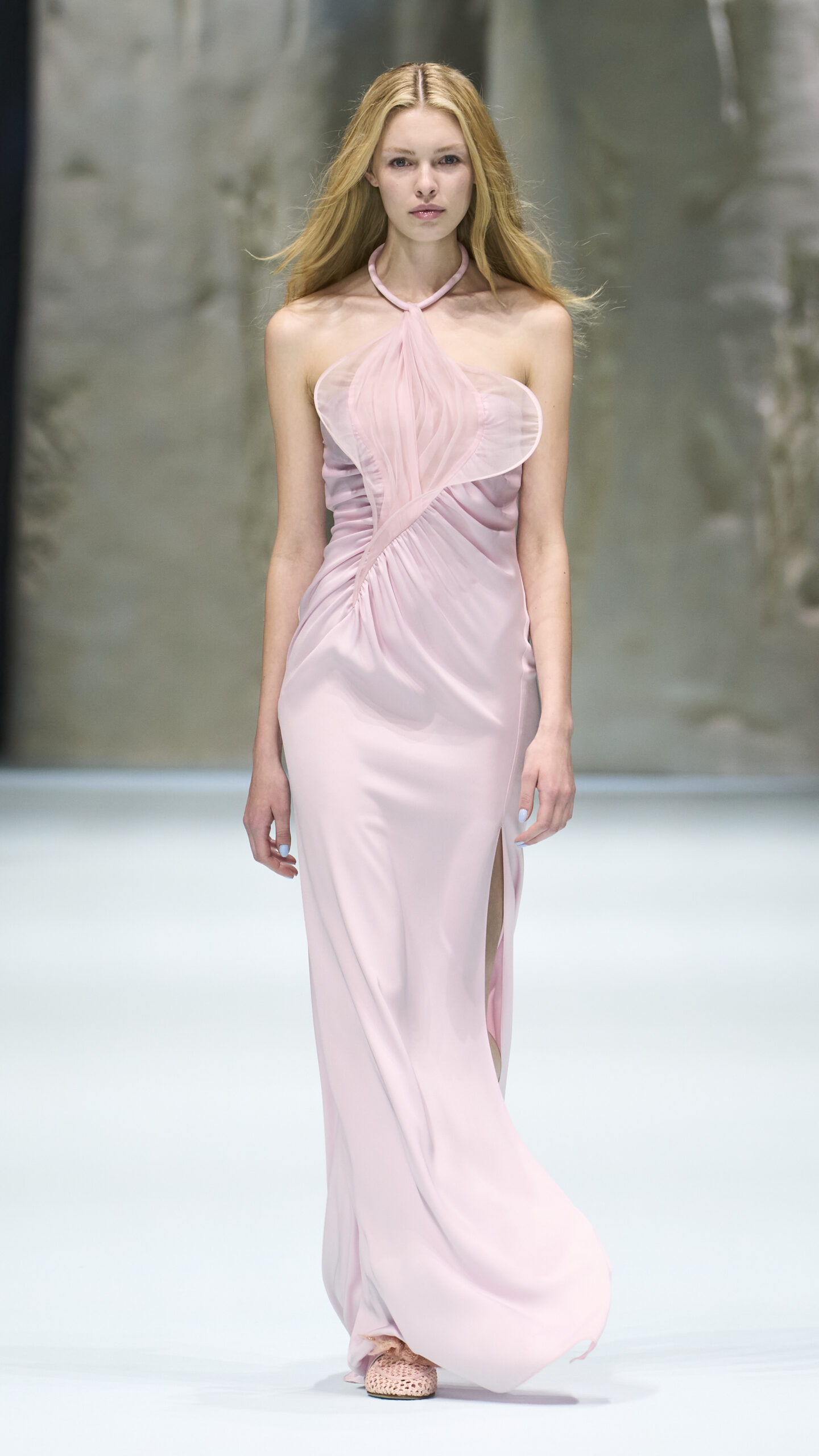
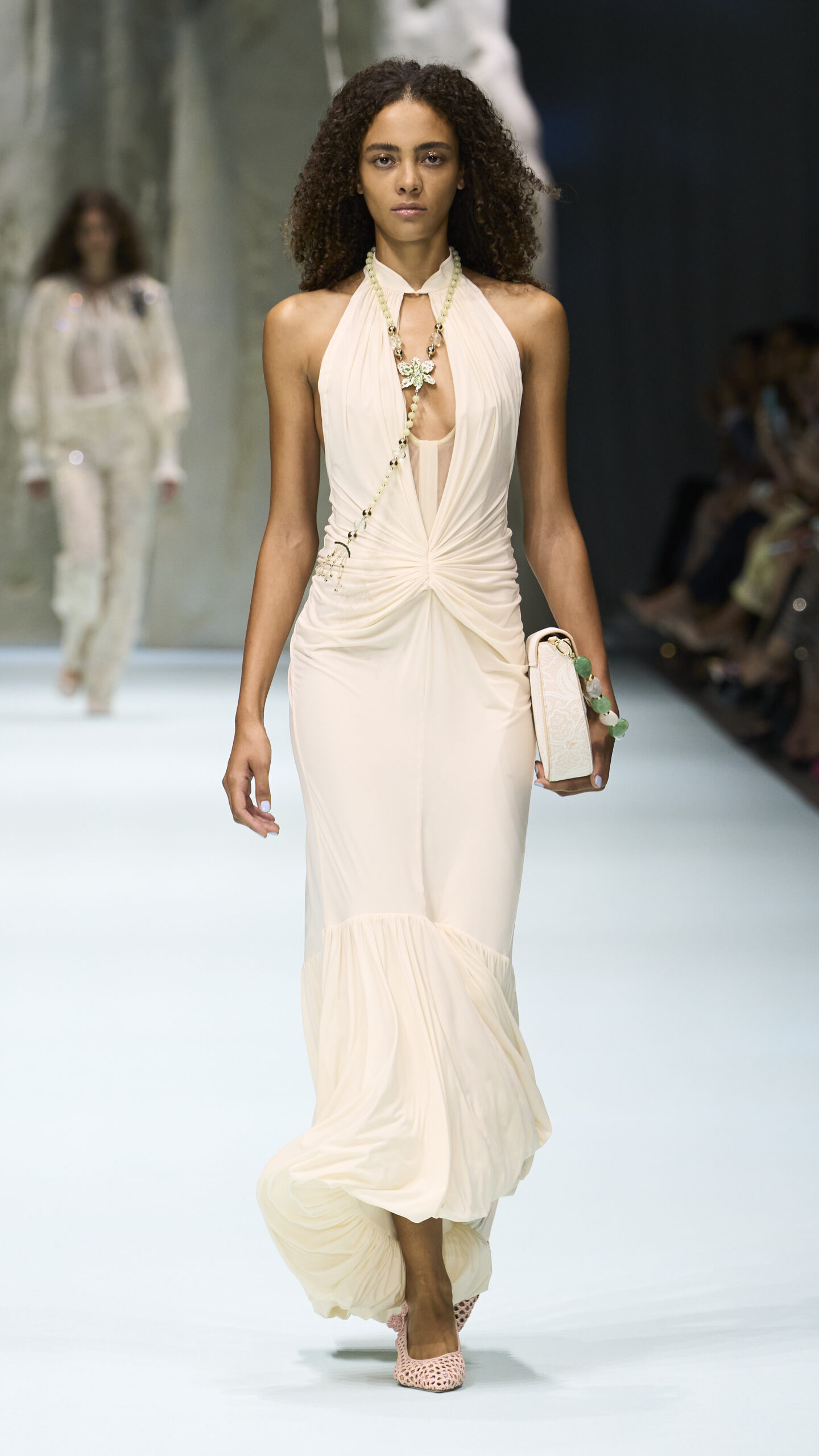
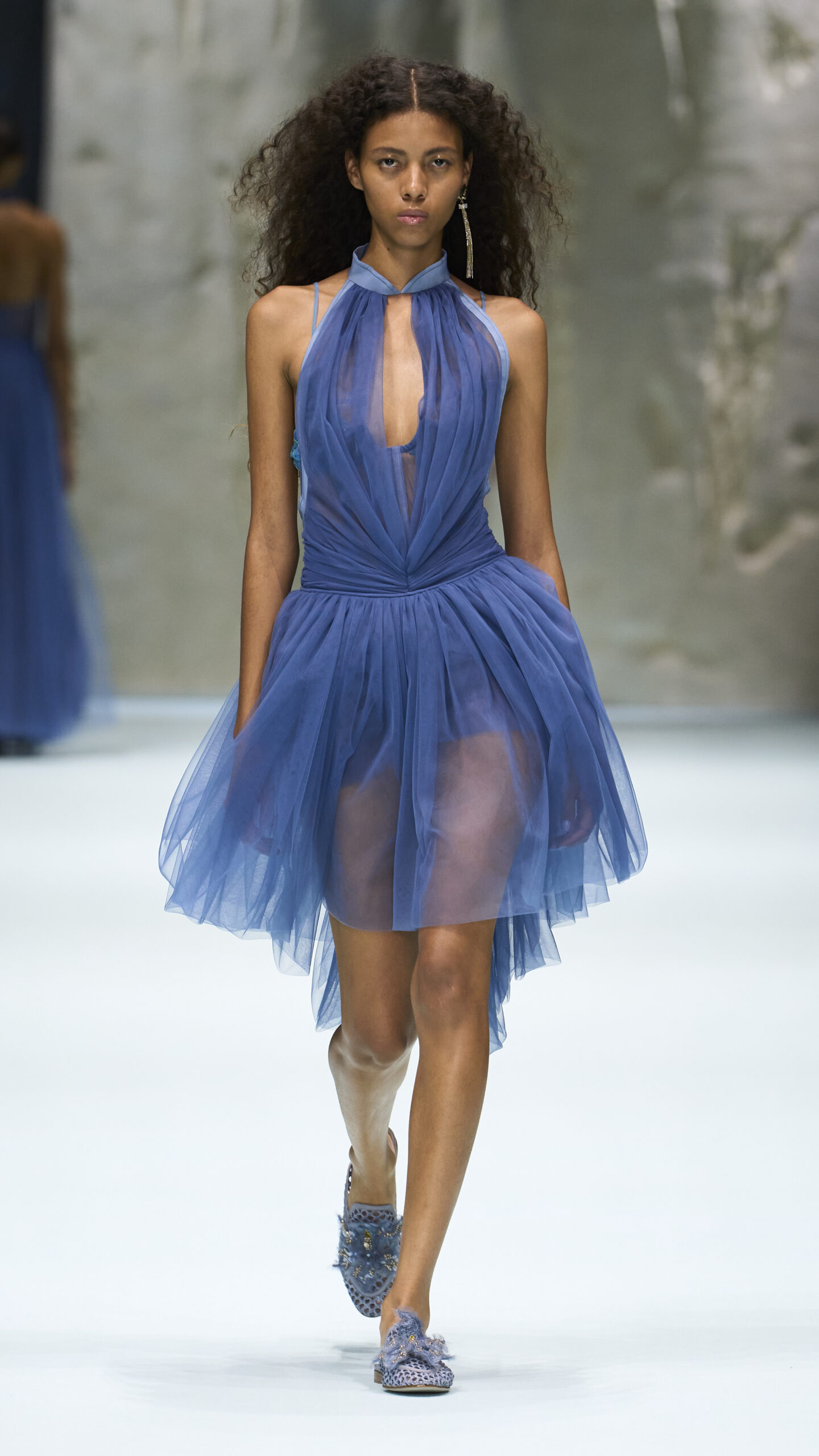
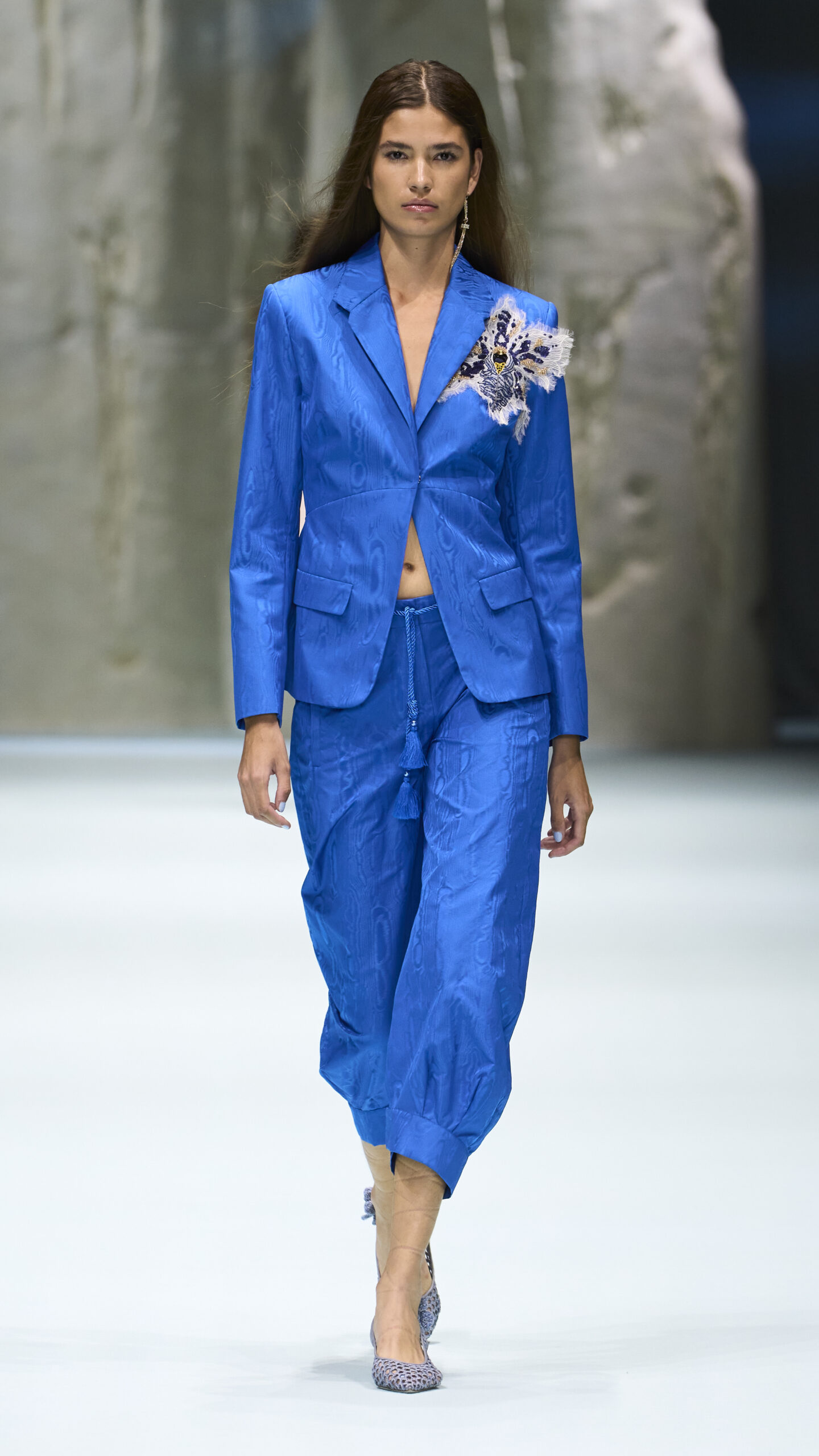
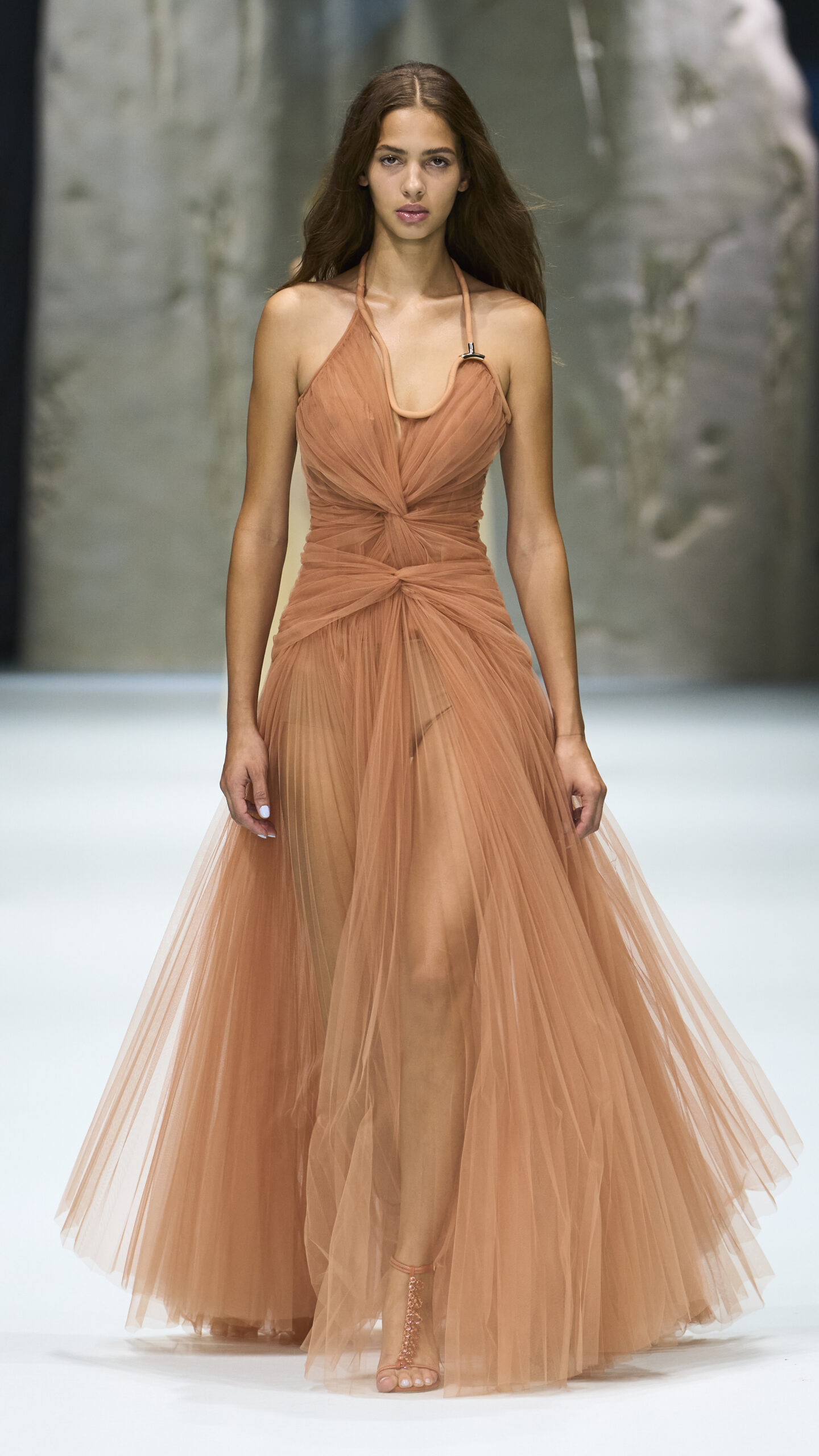
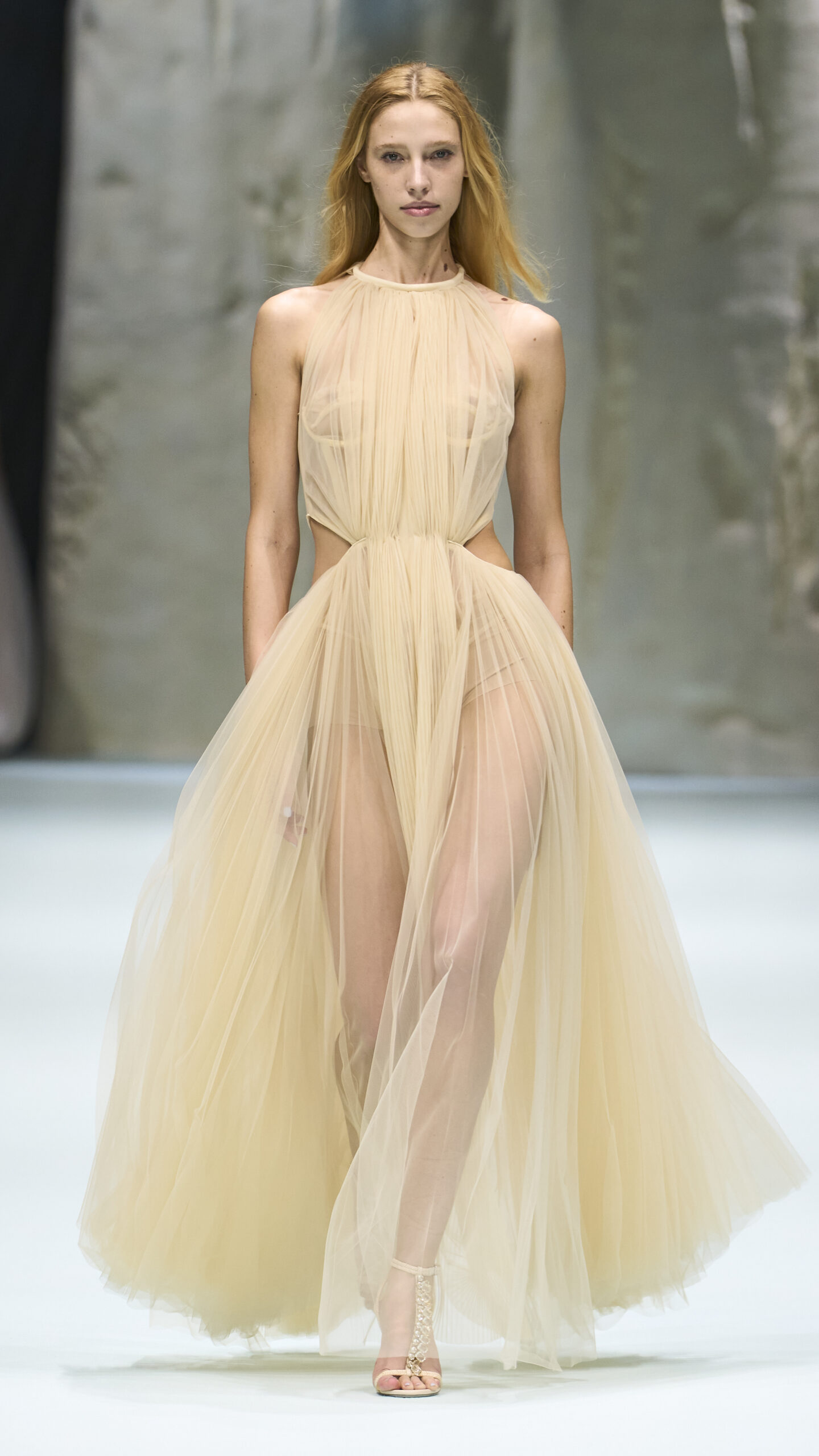
The collection stems from a desire to dress in colour and lightness. The cobalt blue of the Tuareg softens into delicate pale blue, alongside the hues of golden sand and desert sunsets, shifting from red to paprika, through to the off-white tones of the atmosphere surrounding the oases.
The mineral world finds further inspiration in the jewellery of Suzanne Belperron and her use of hardstones.
Their surfaces, depth and nuances become a chromatic reference for the collection, particularly across a spectrum of blues, from cobalt to paler, more powdery shades.
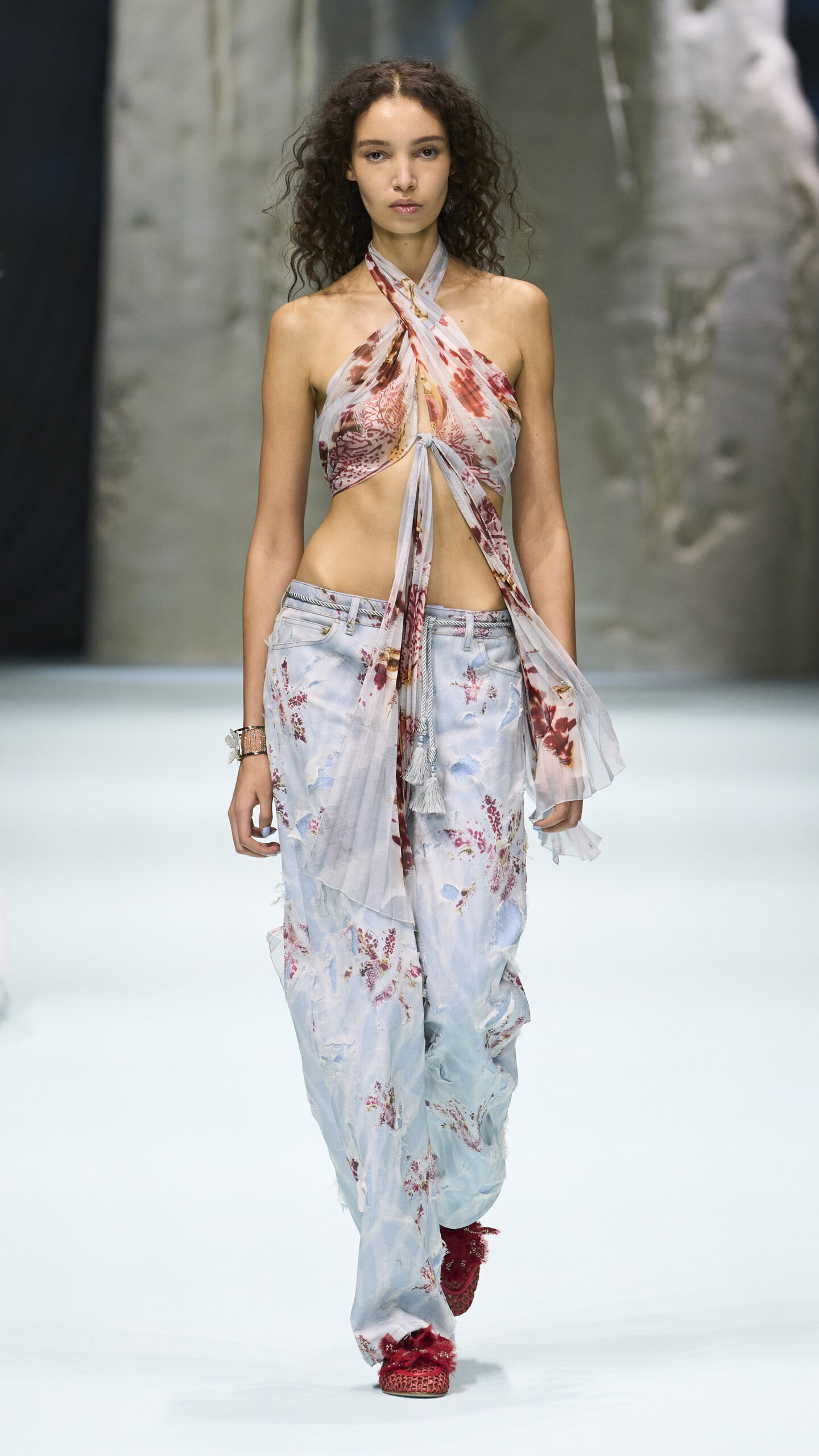
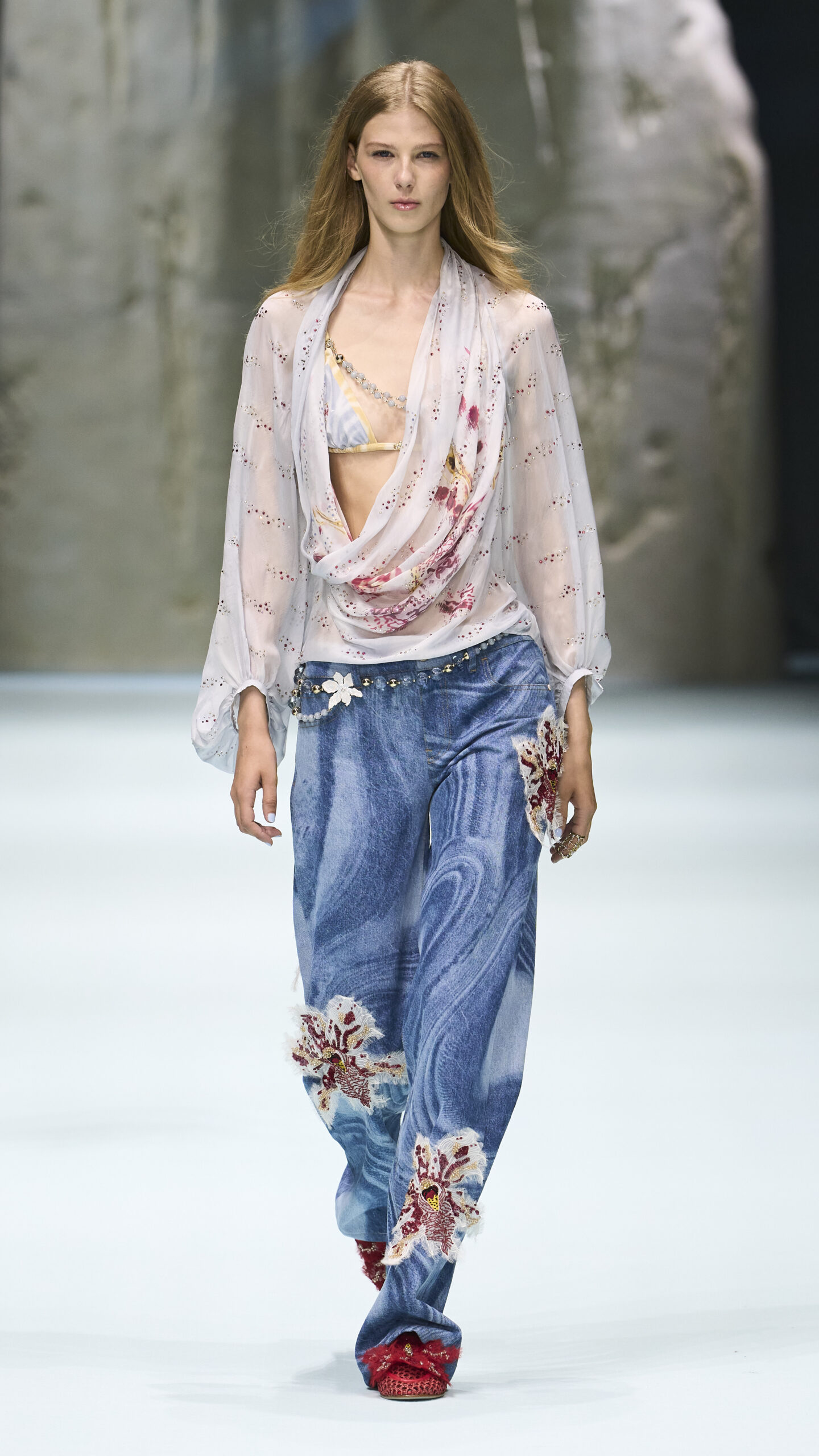
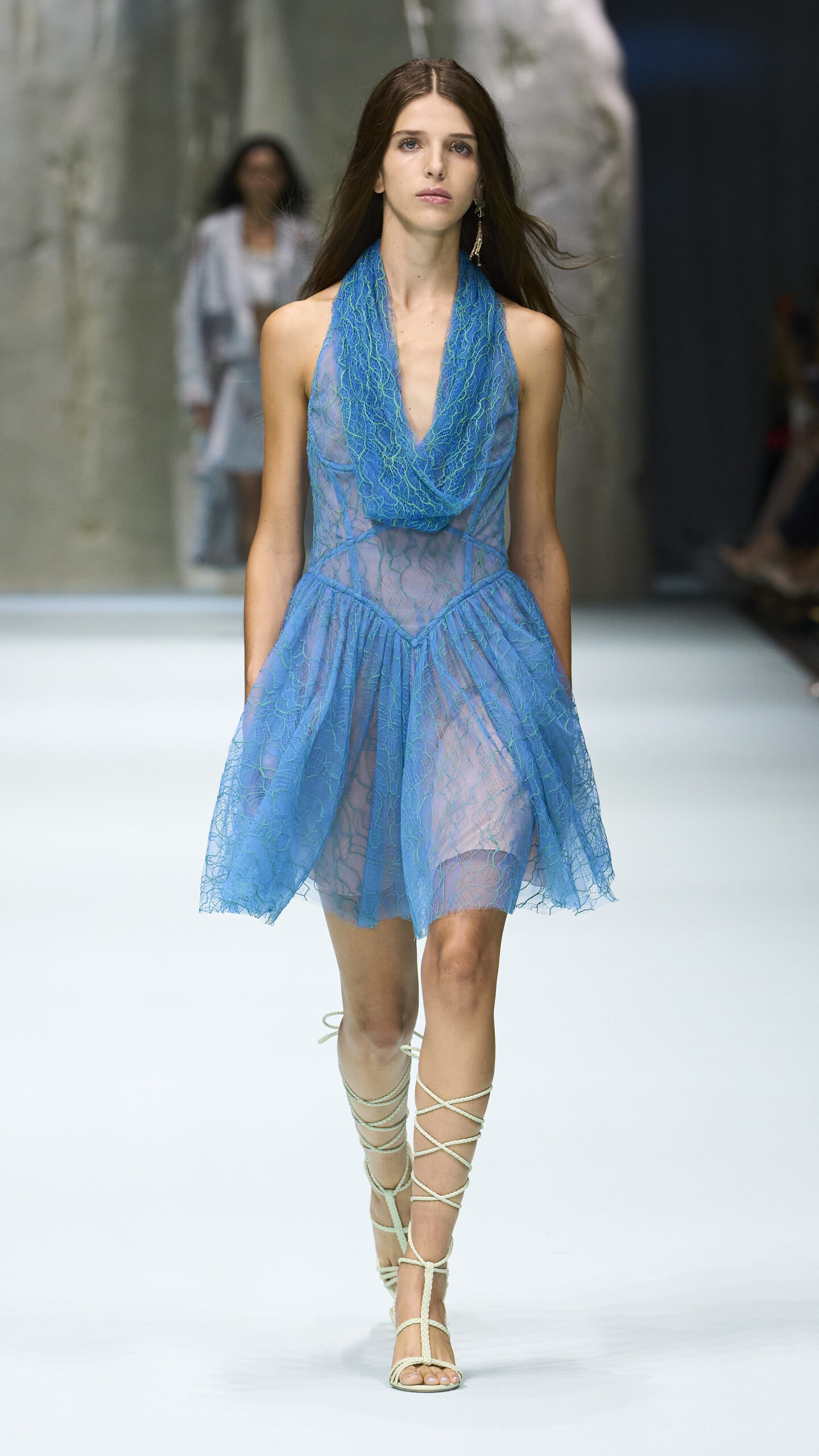
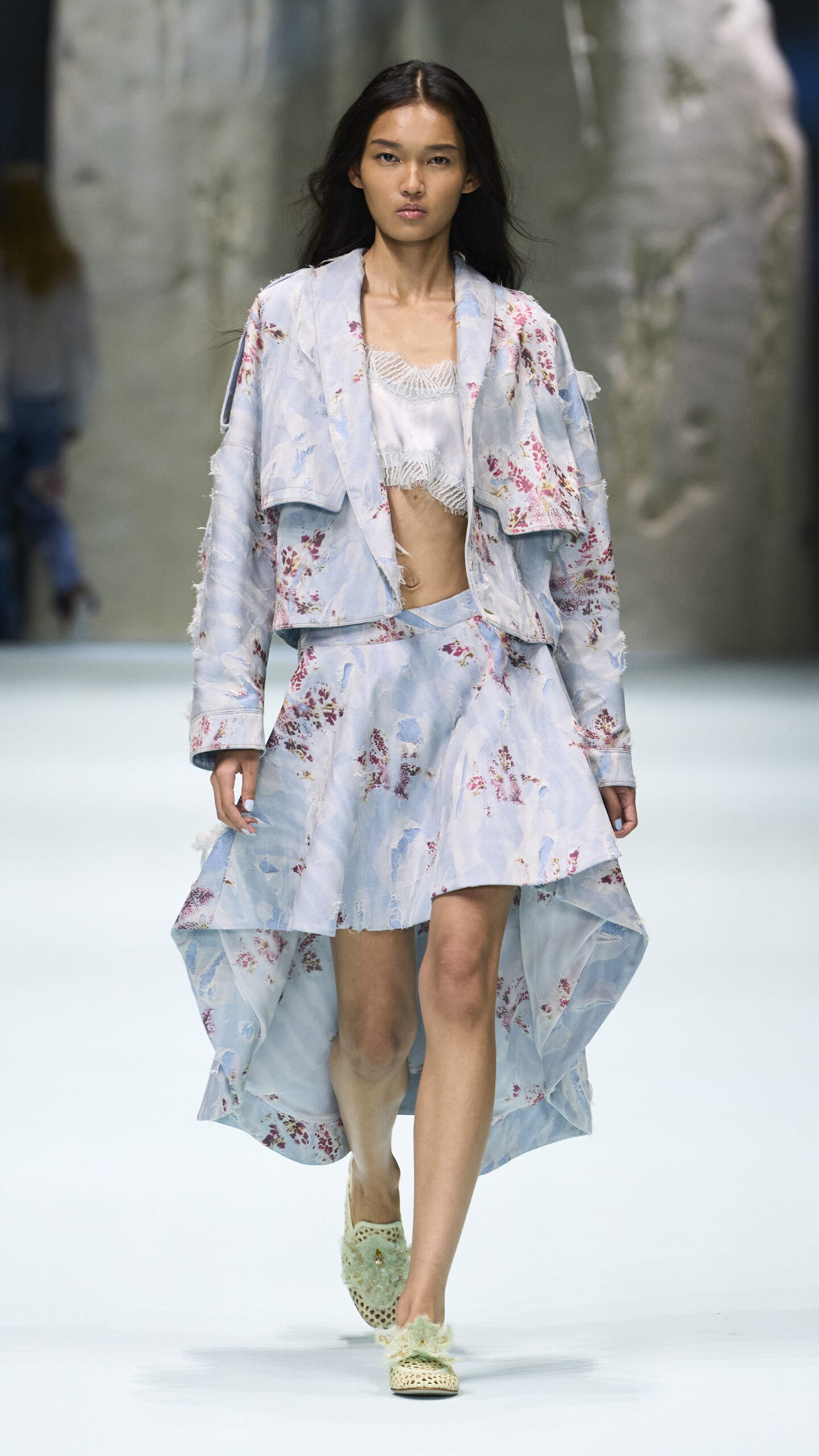
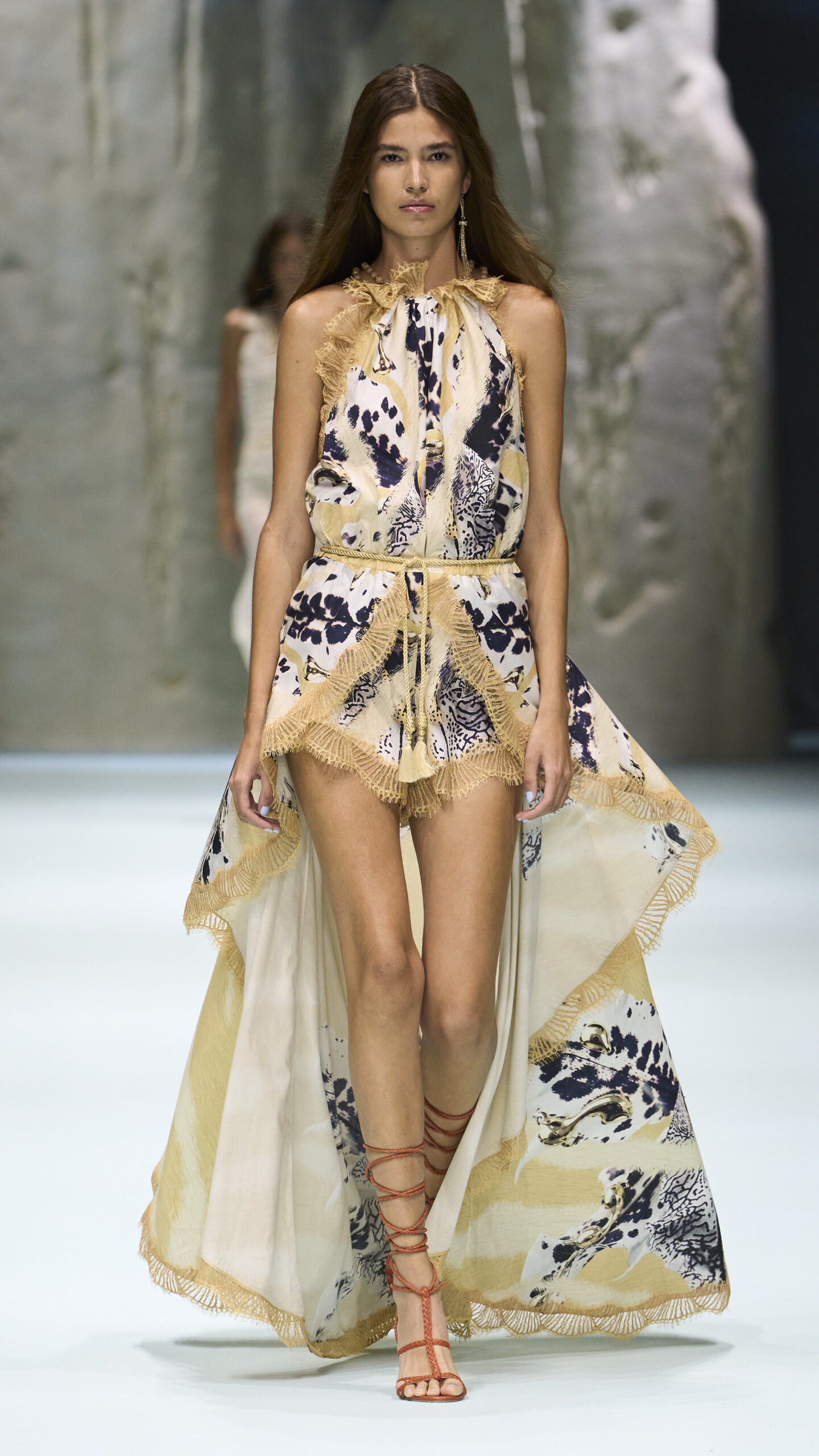
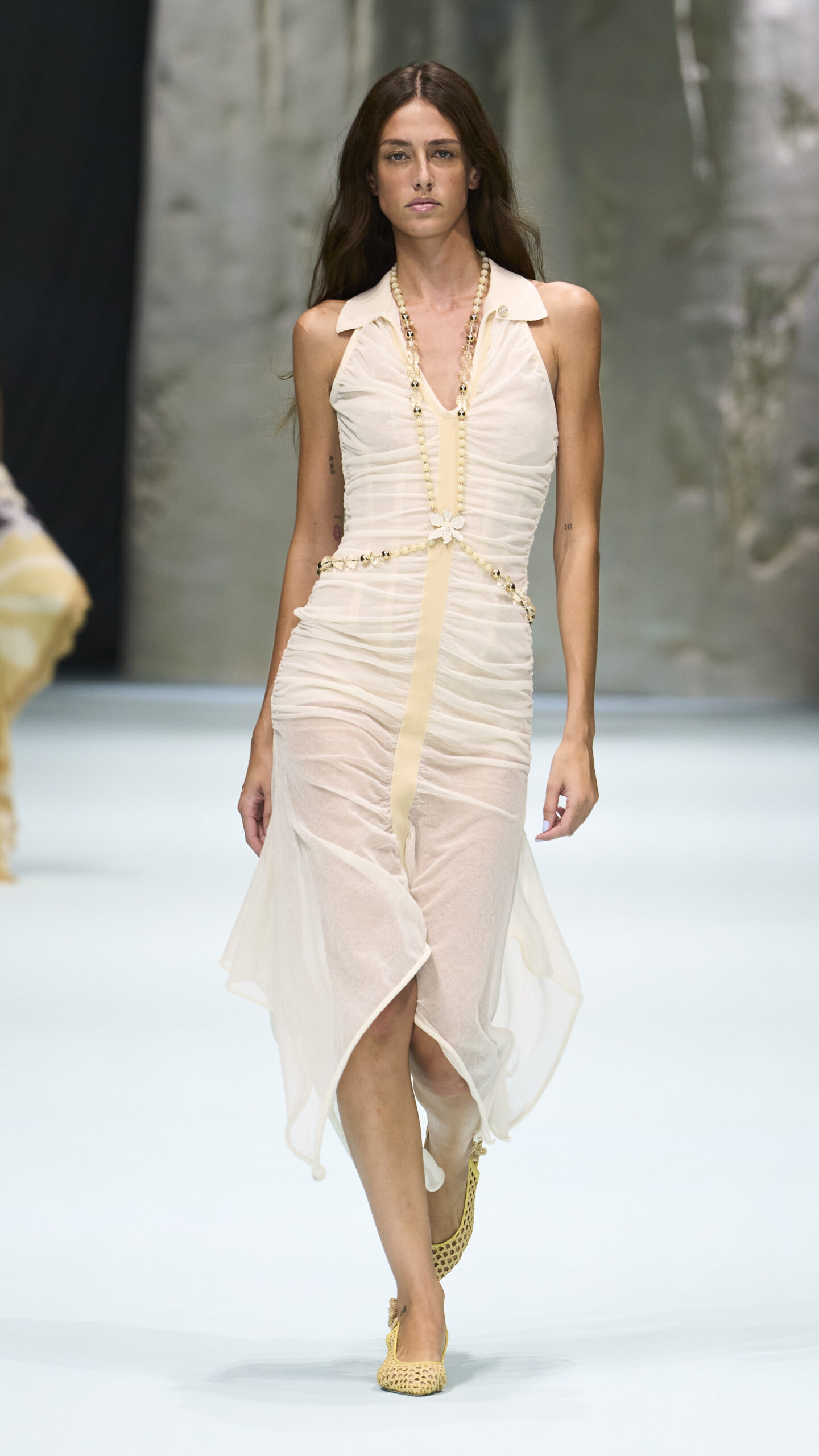
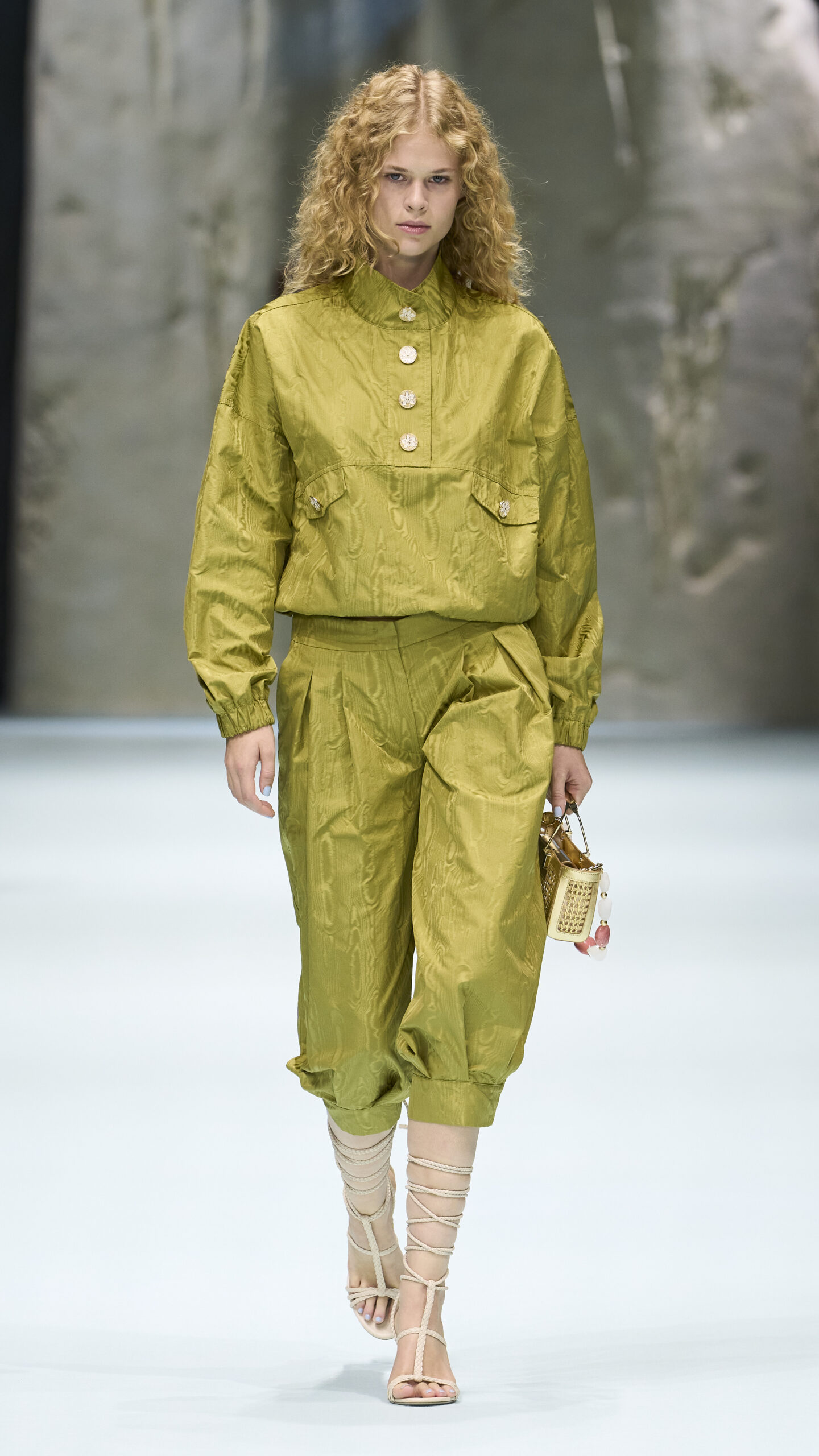
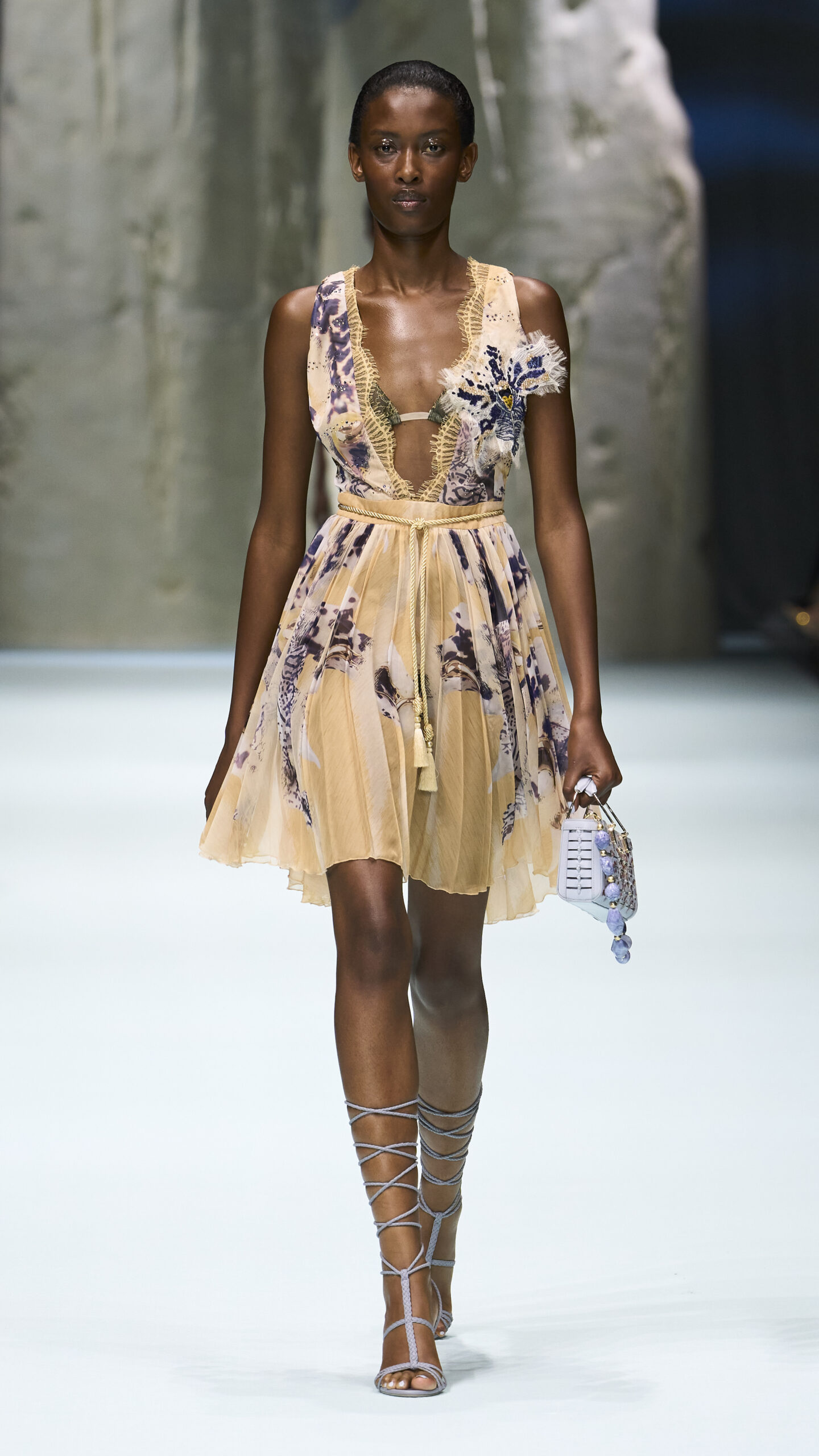
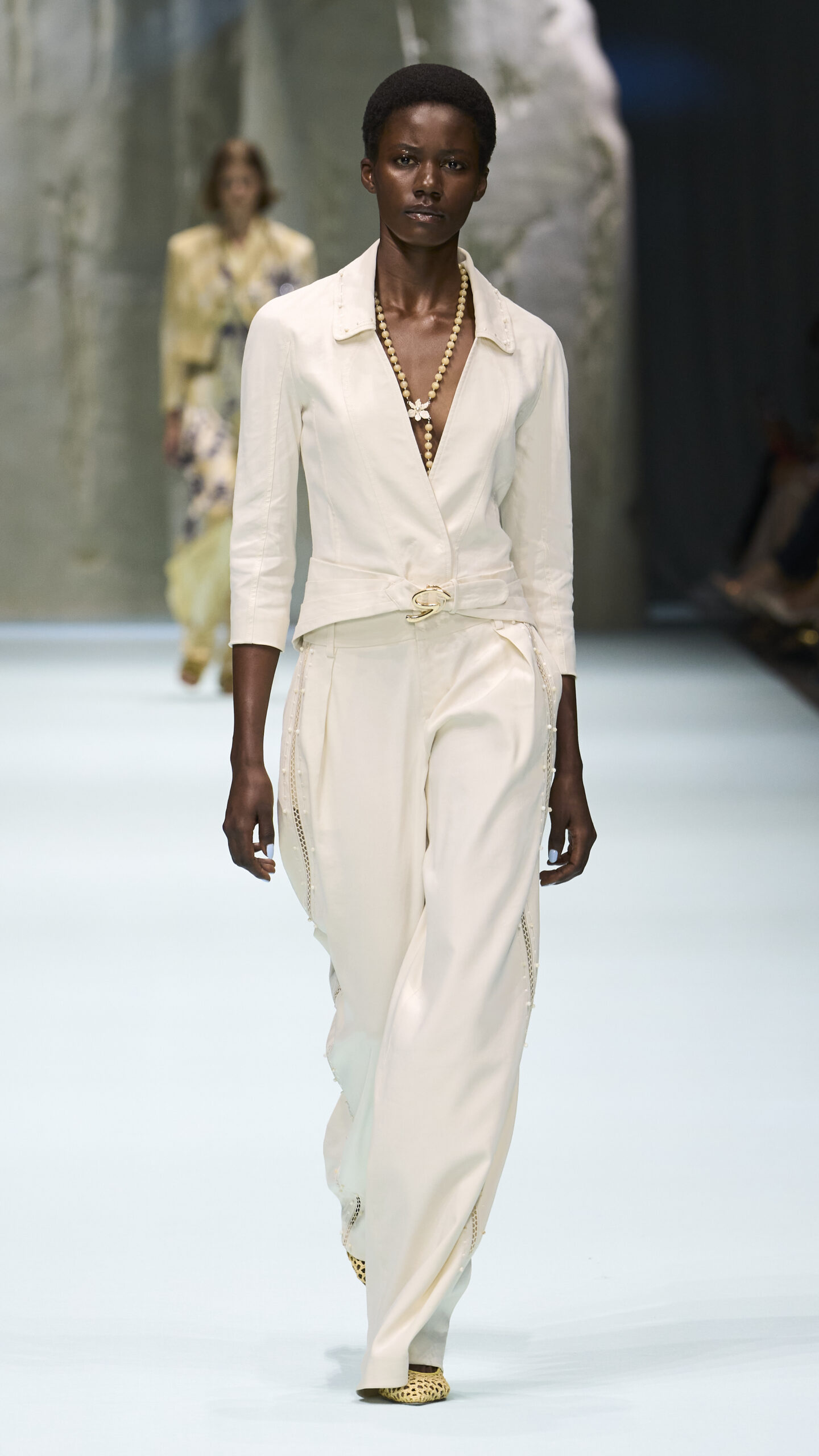
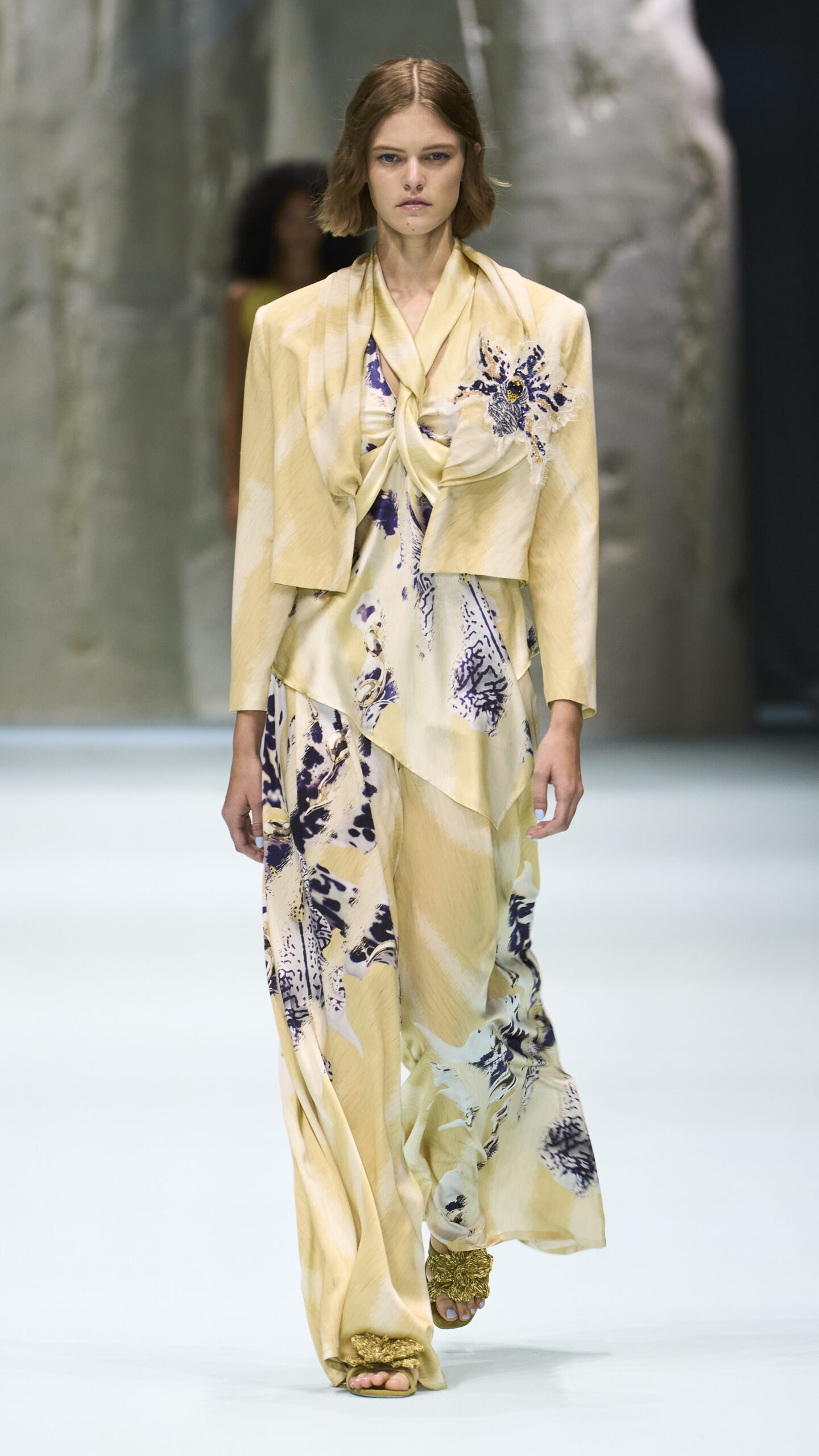
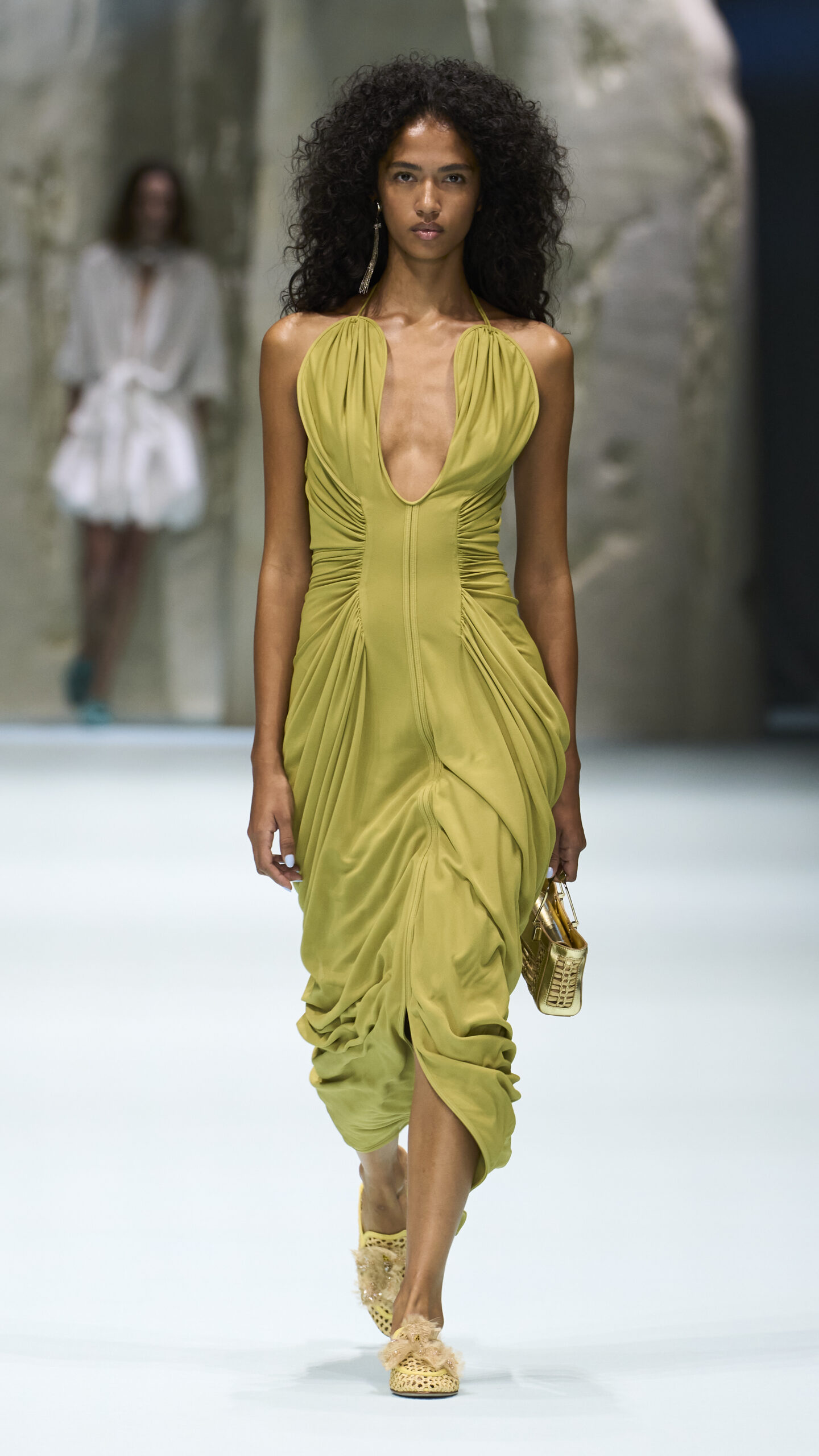
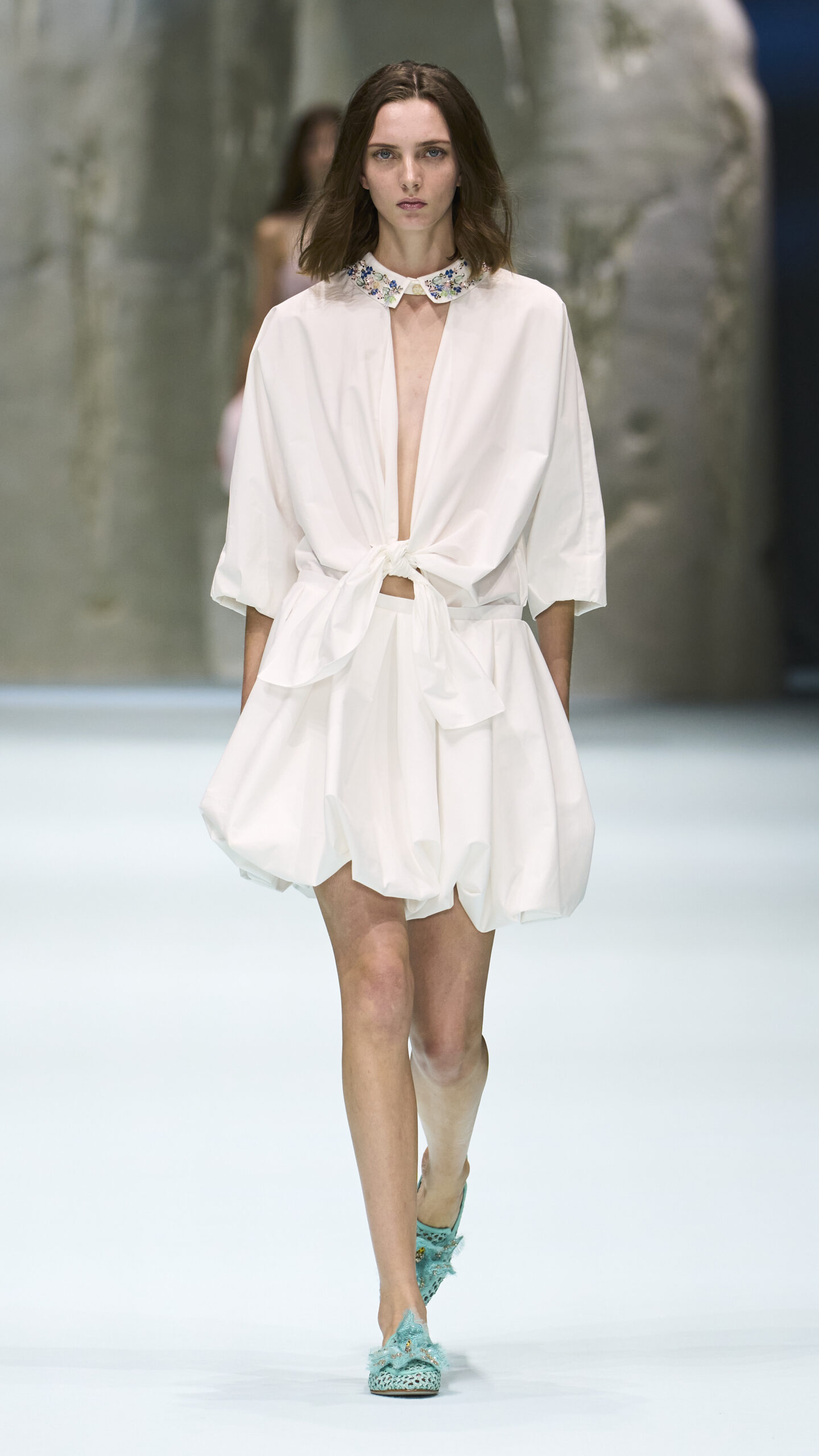
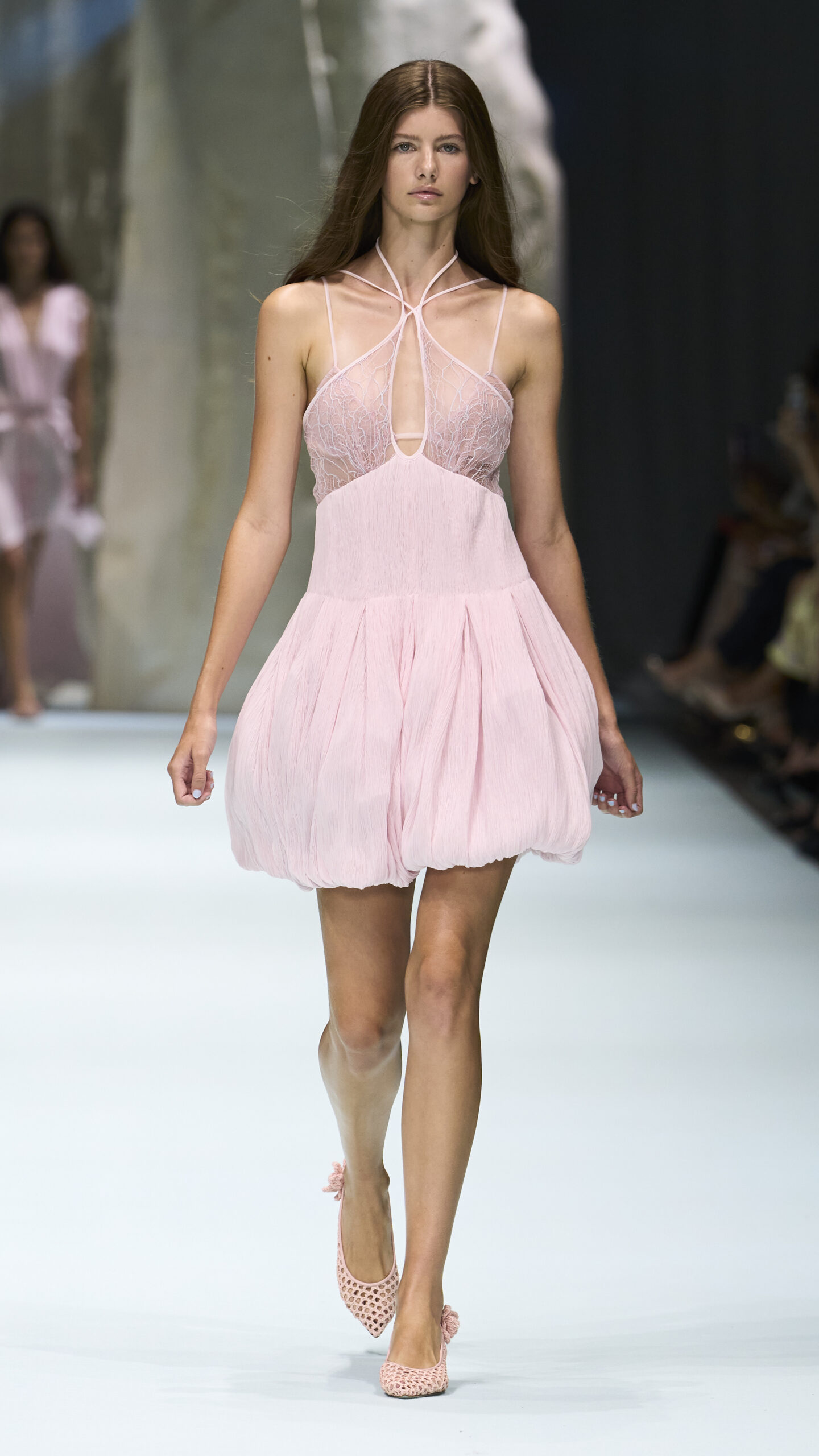
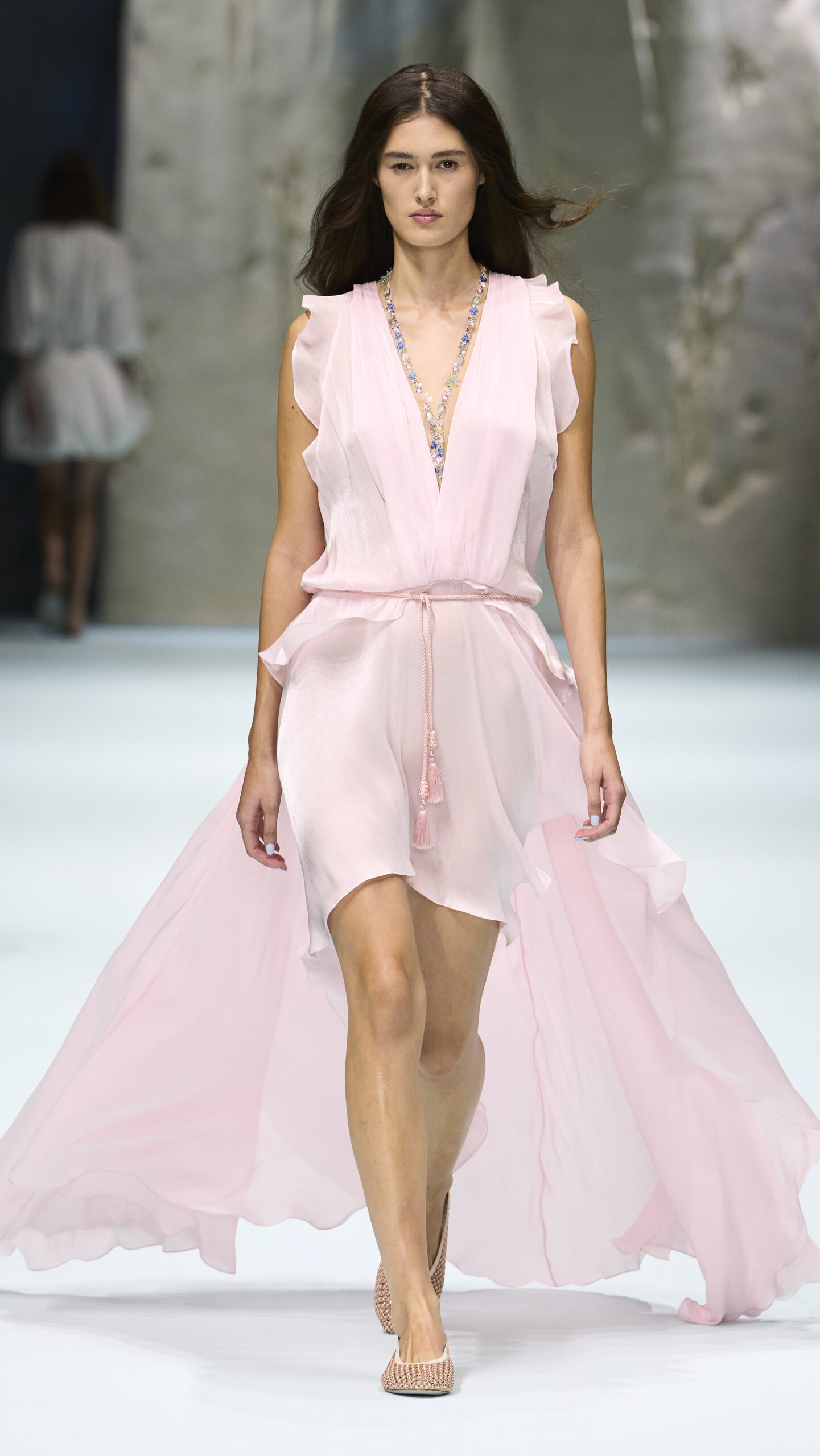
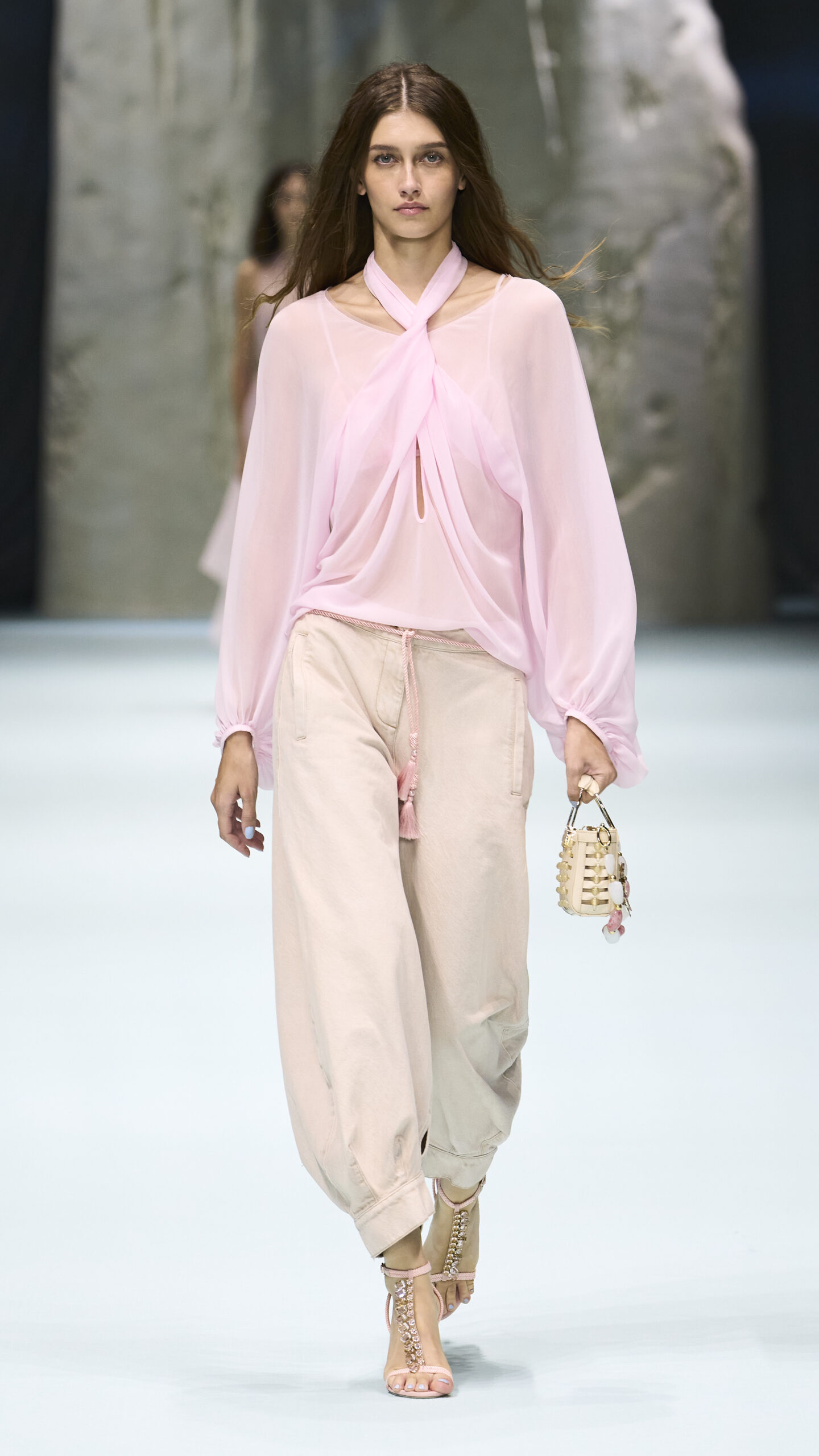
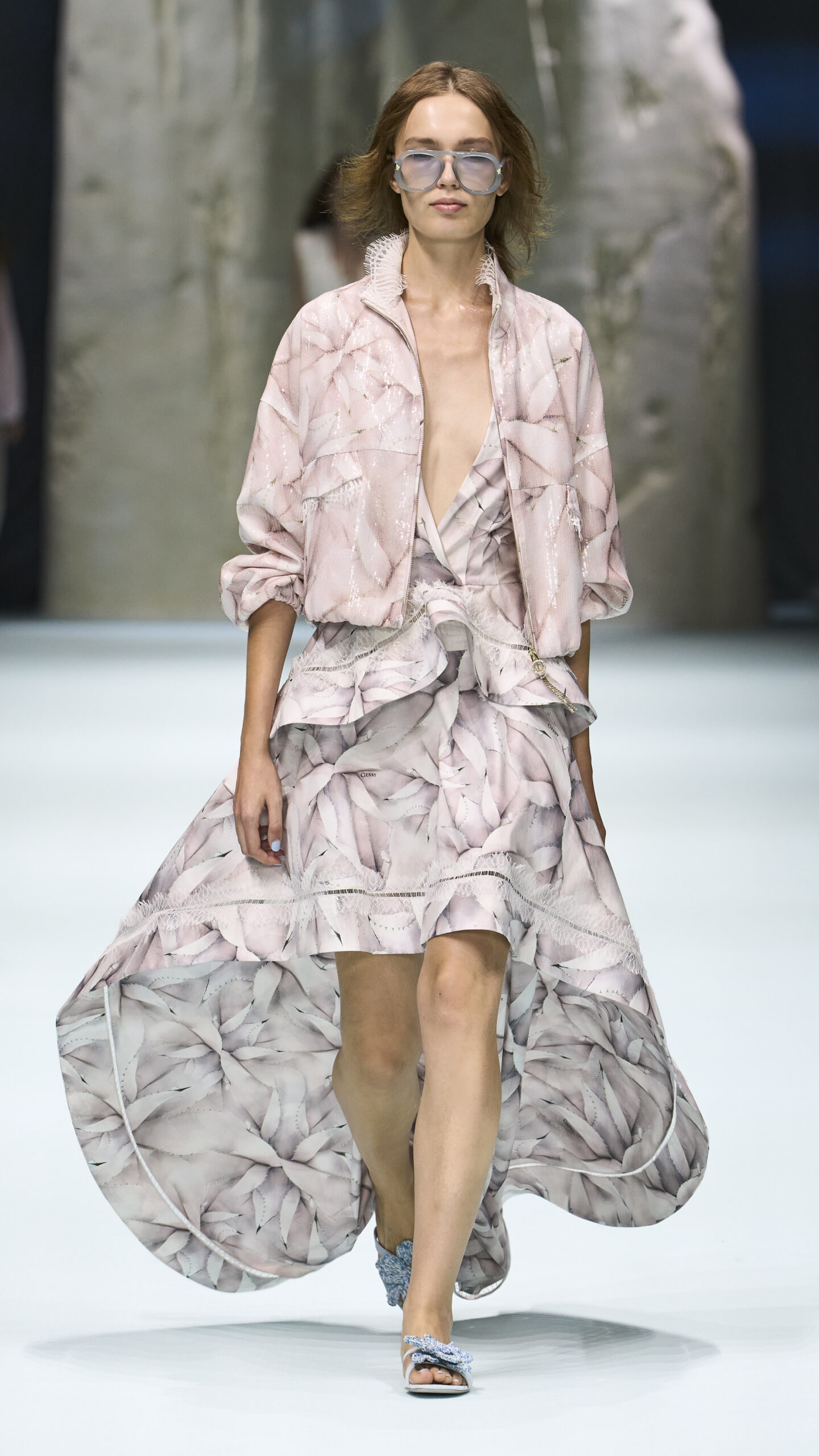
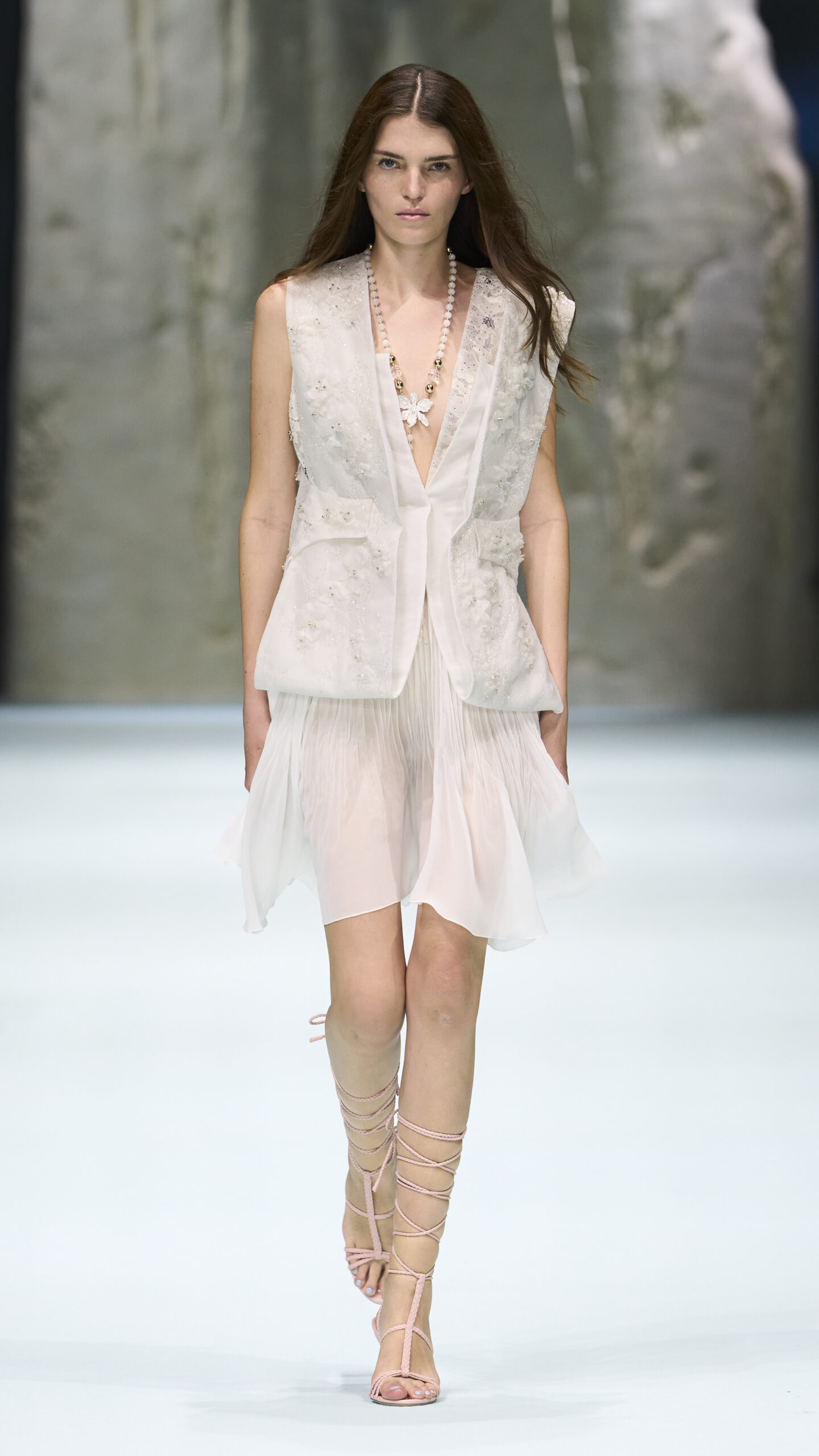
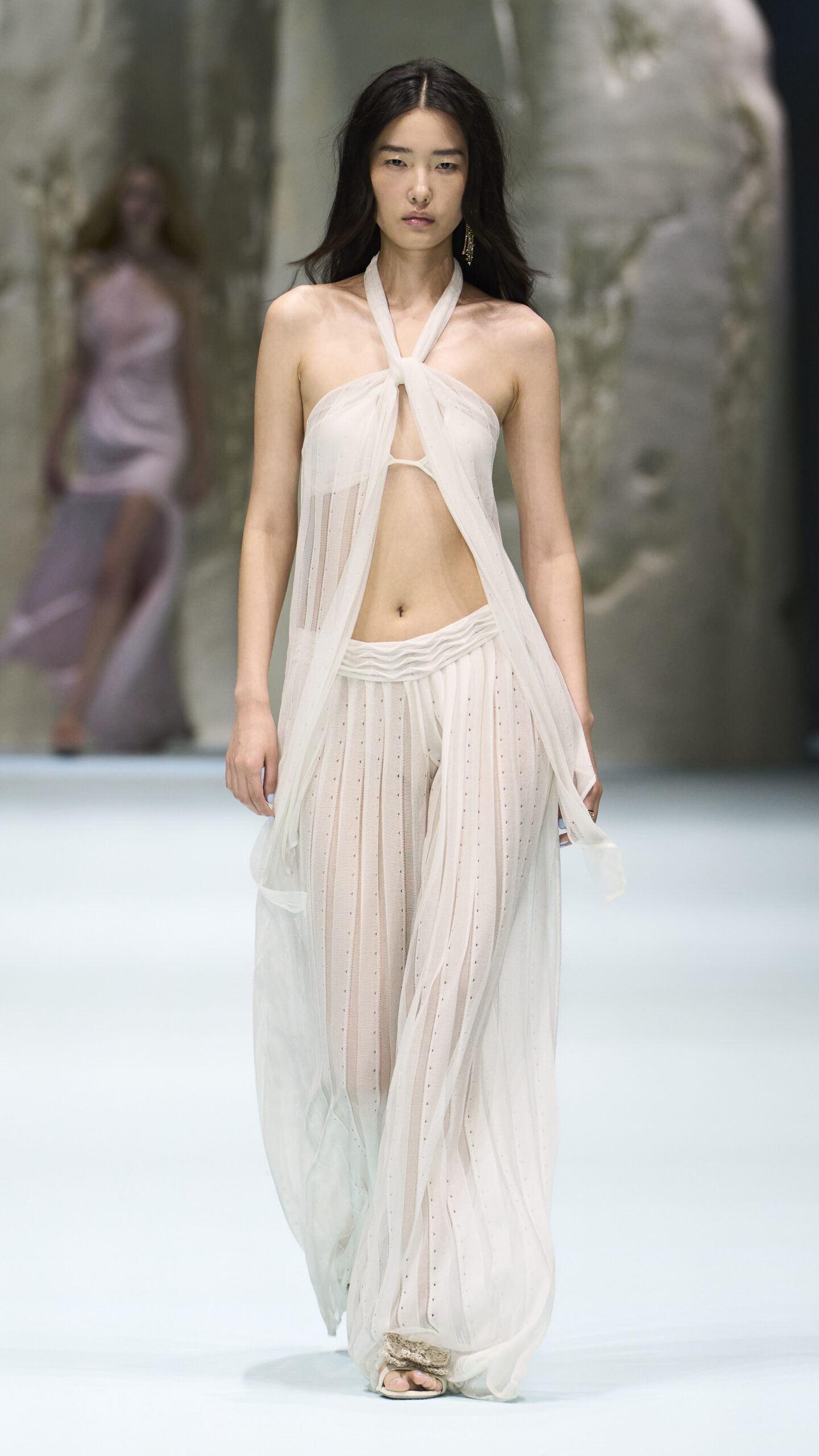
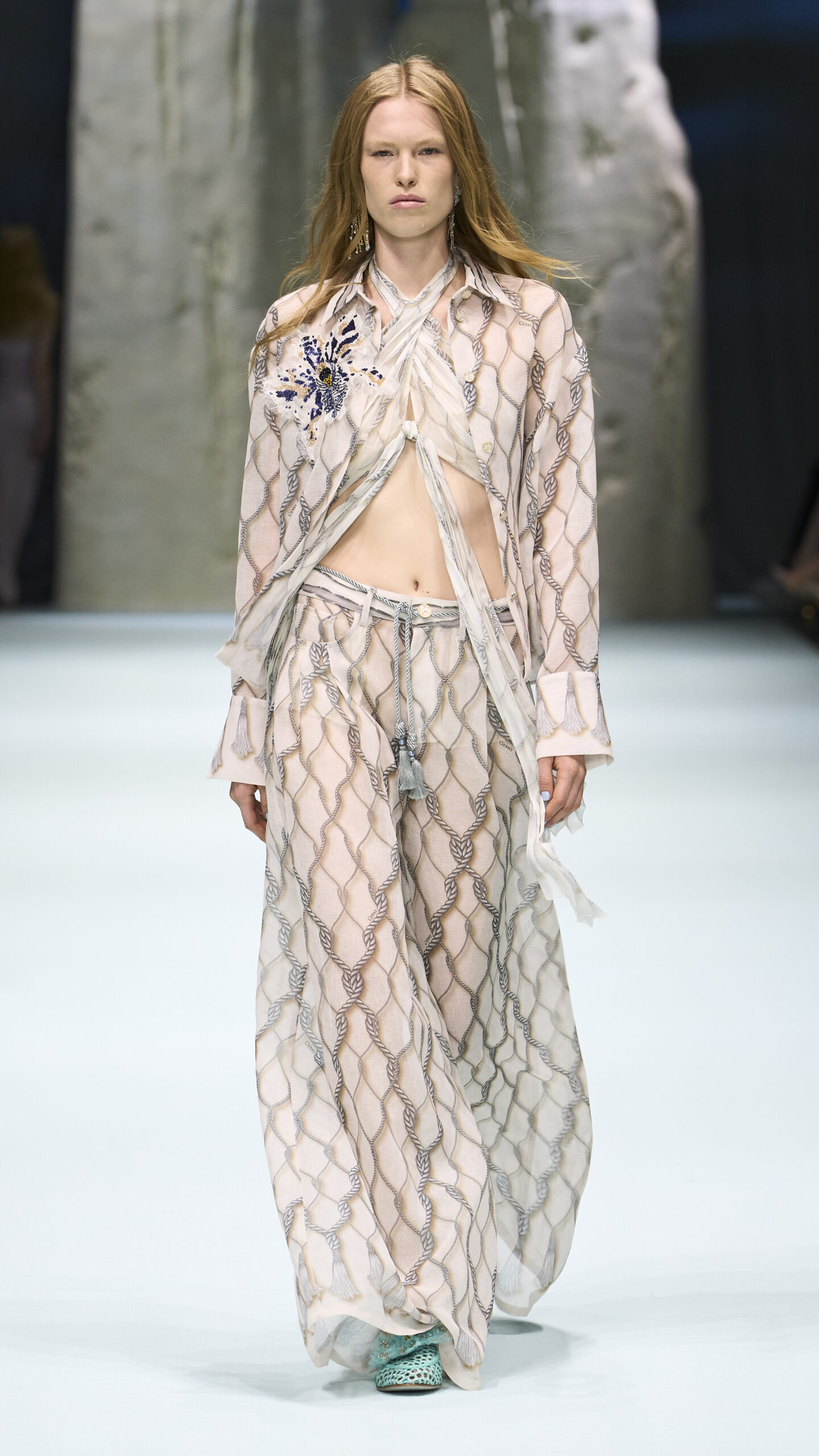
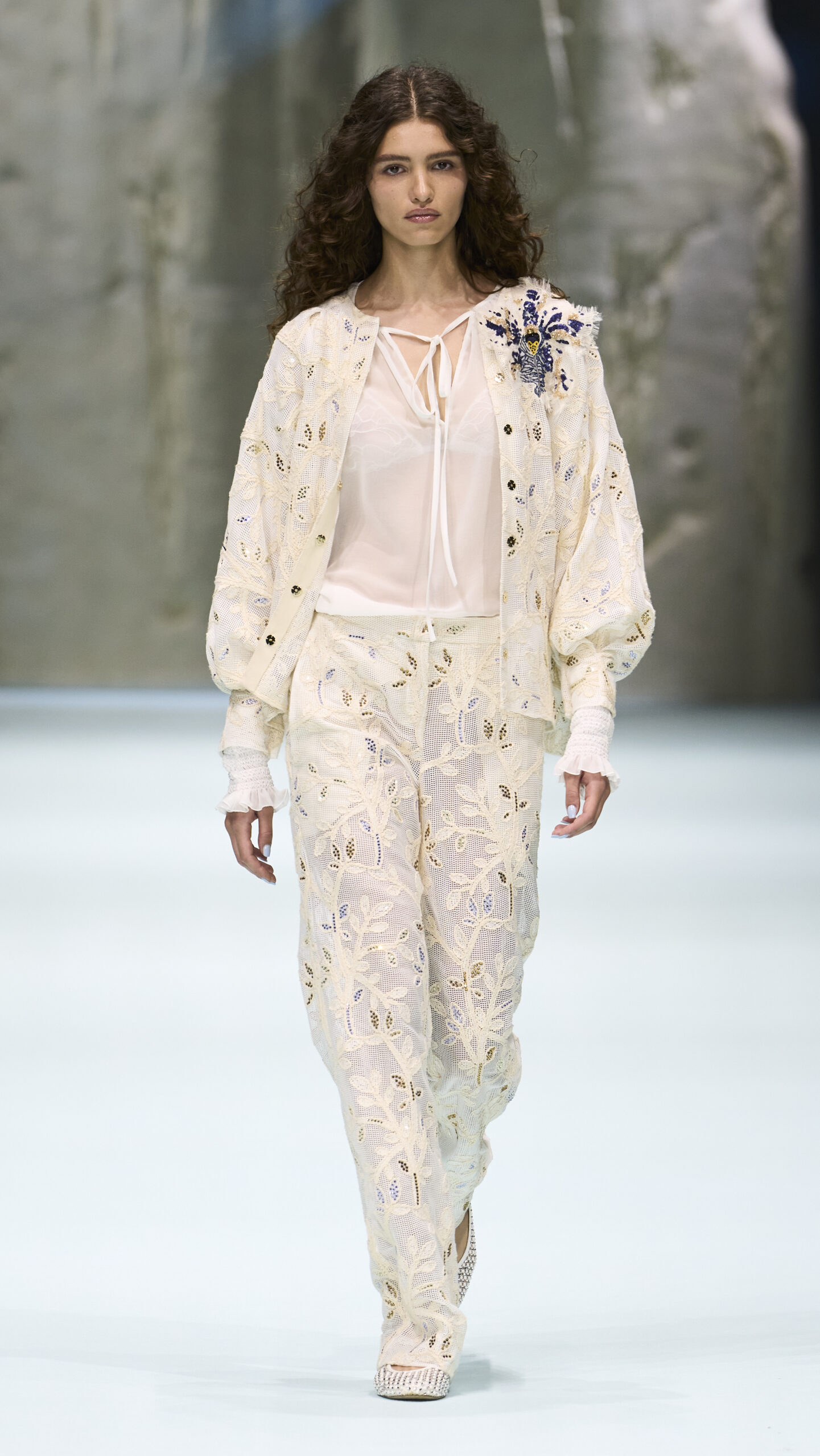
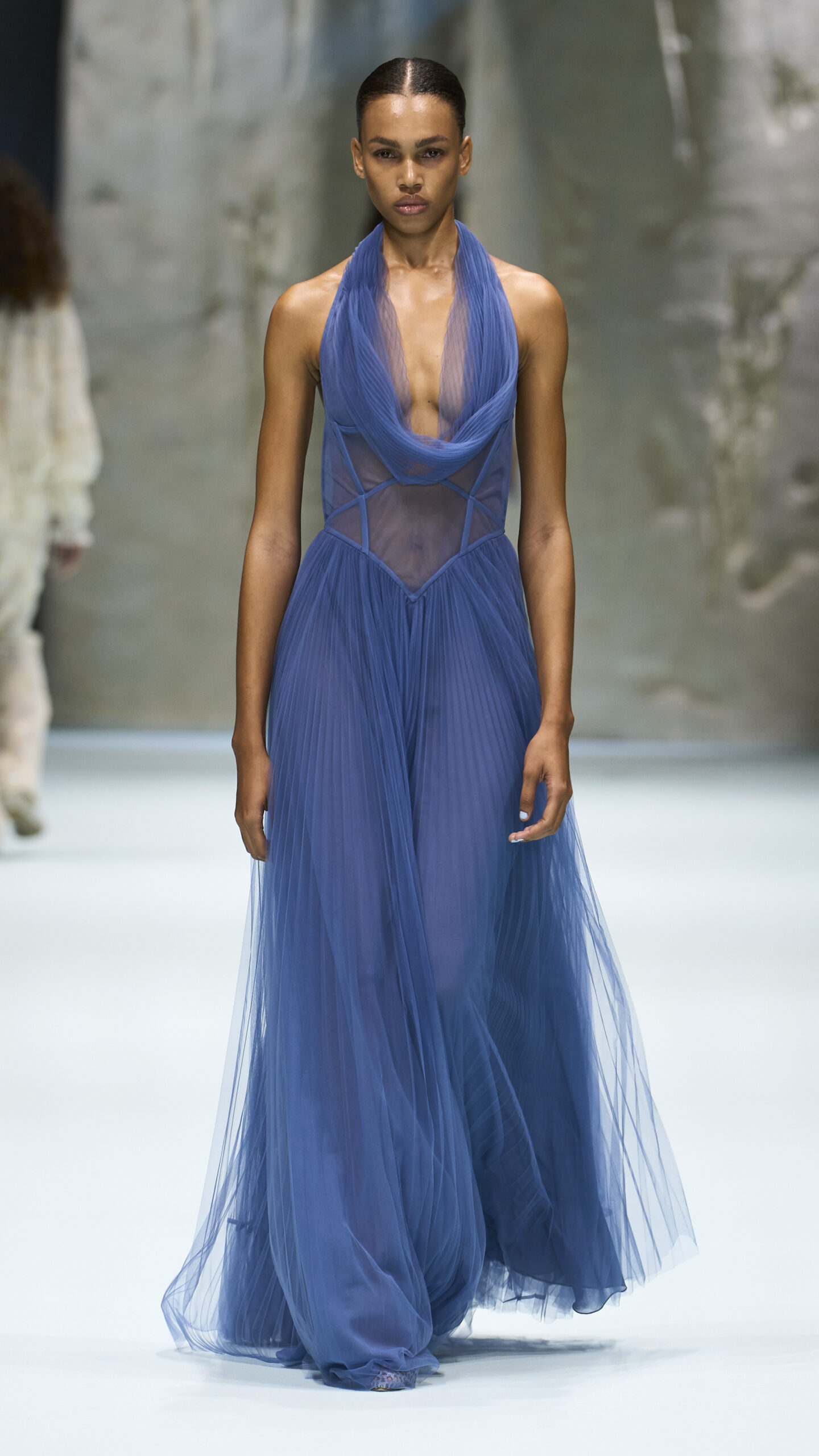
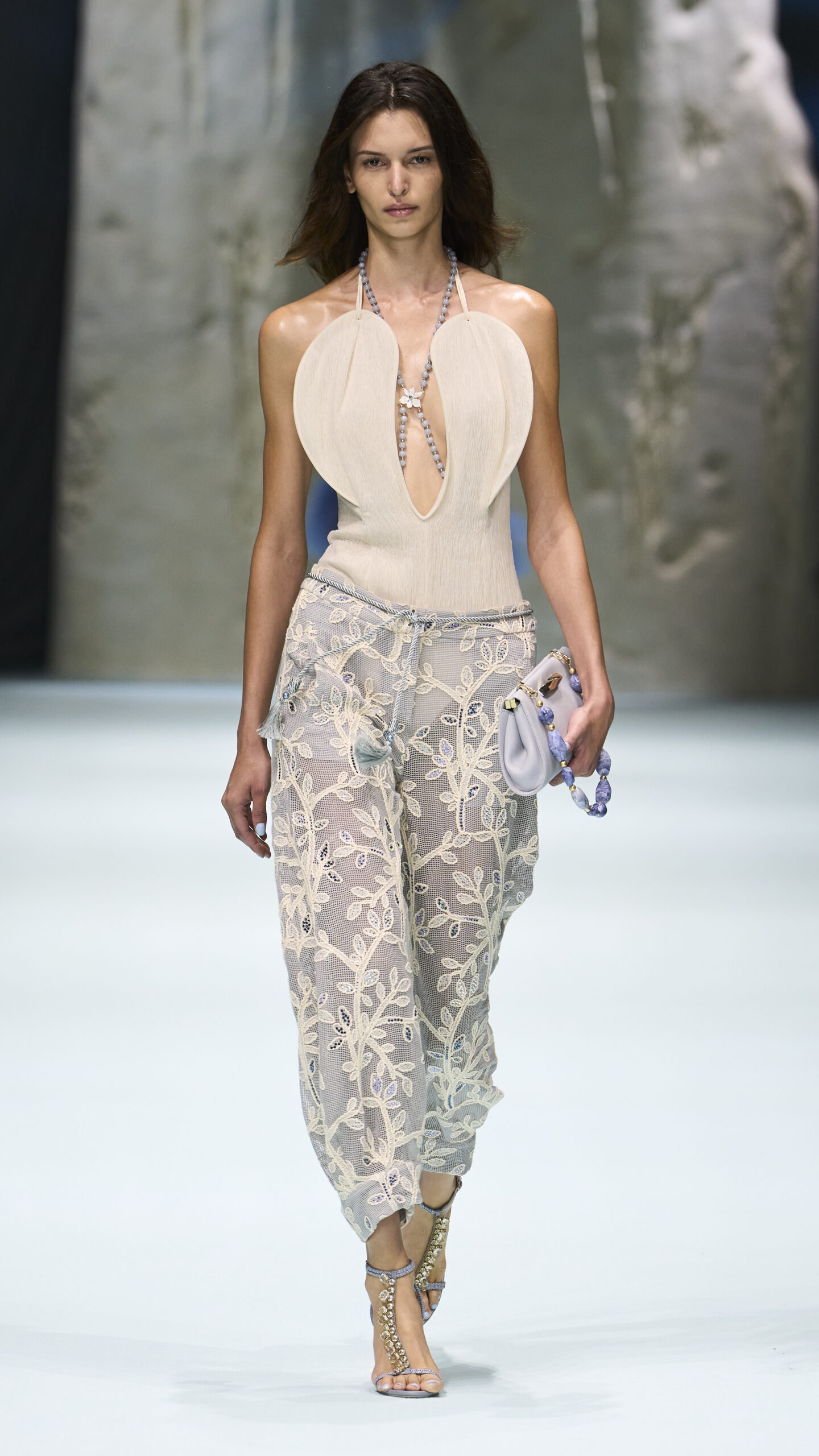
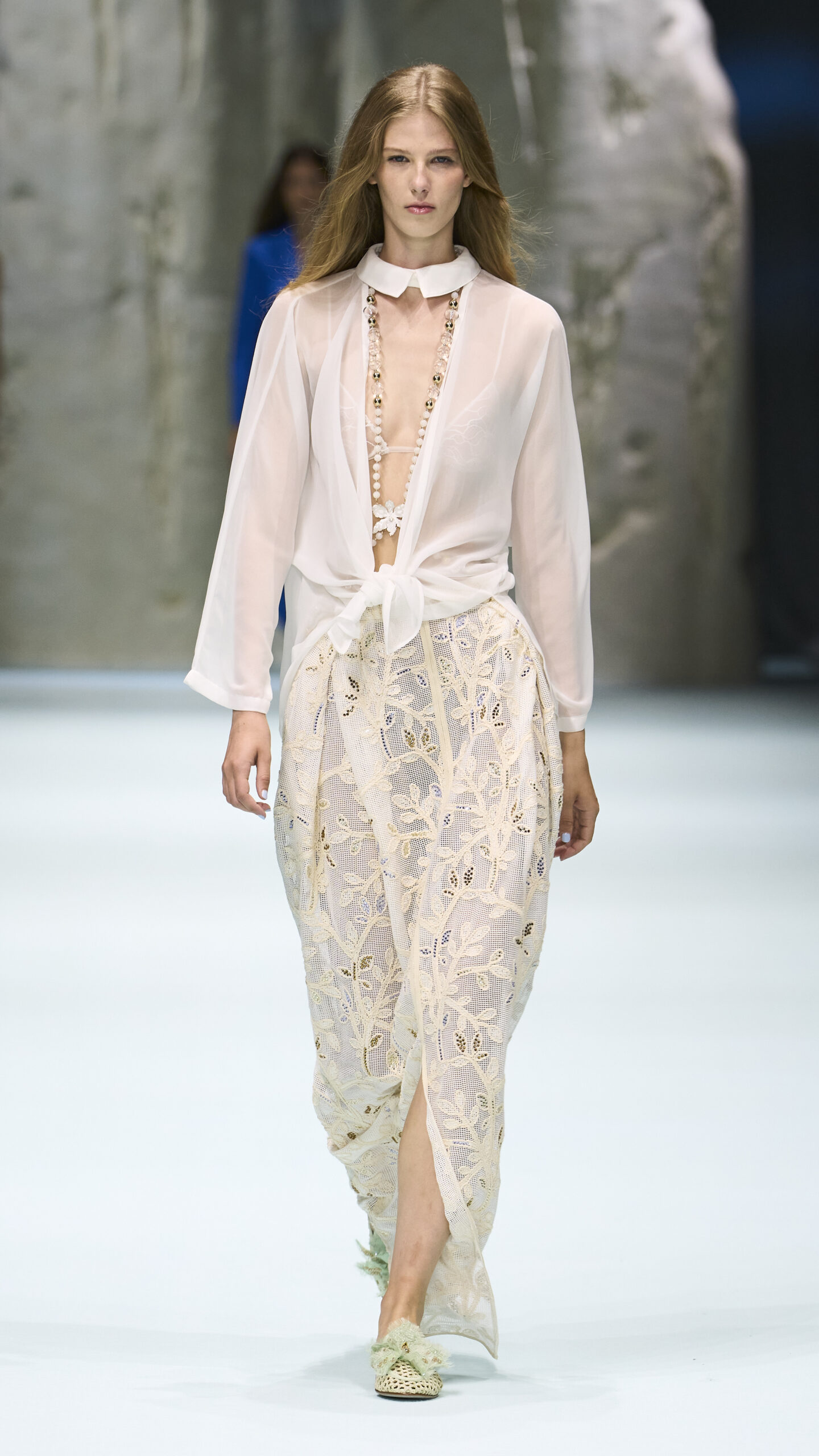
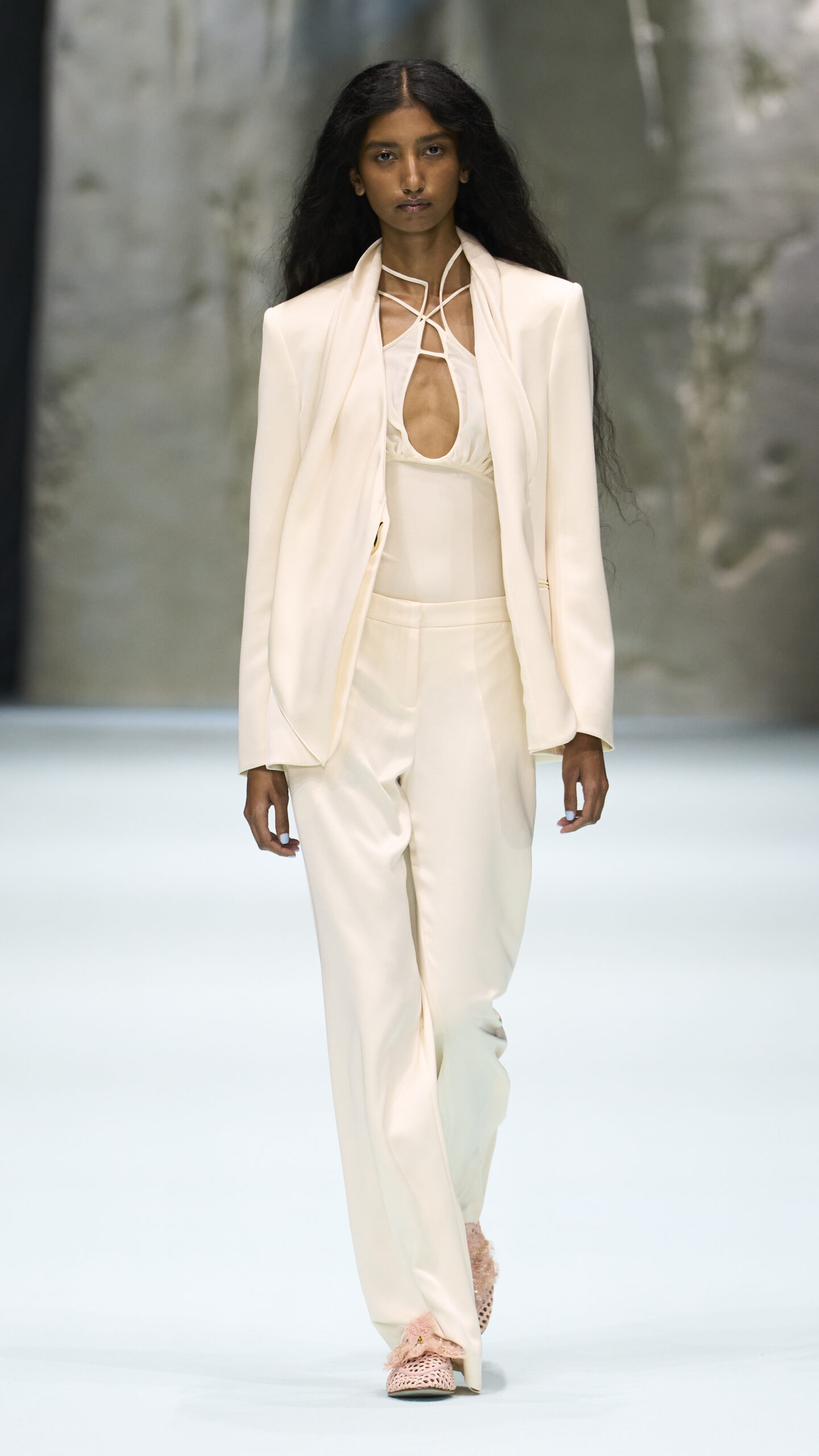
Lightness flows through the silhouettes: jackets have the weight of a shirt, while the scarf becomes a structural element, shaping tops and ethereal dresses that move around the body like sand carried by the wind. Shirts open into soft cagoule necklines, revealing glimpses of lace bras beneath in a delicate interplay of layering and transparency.
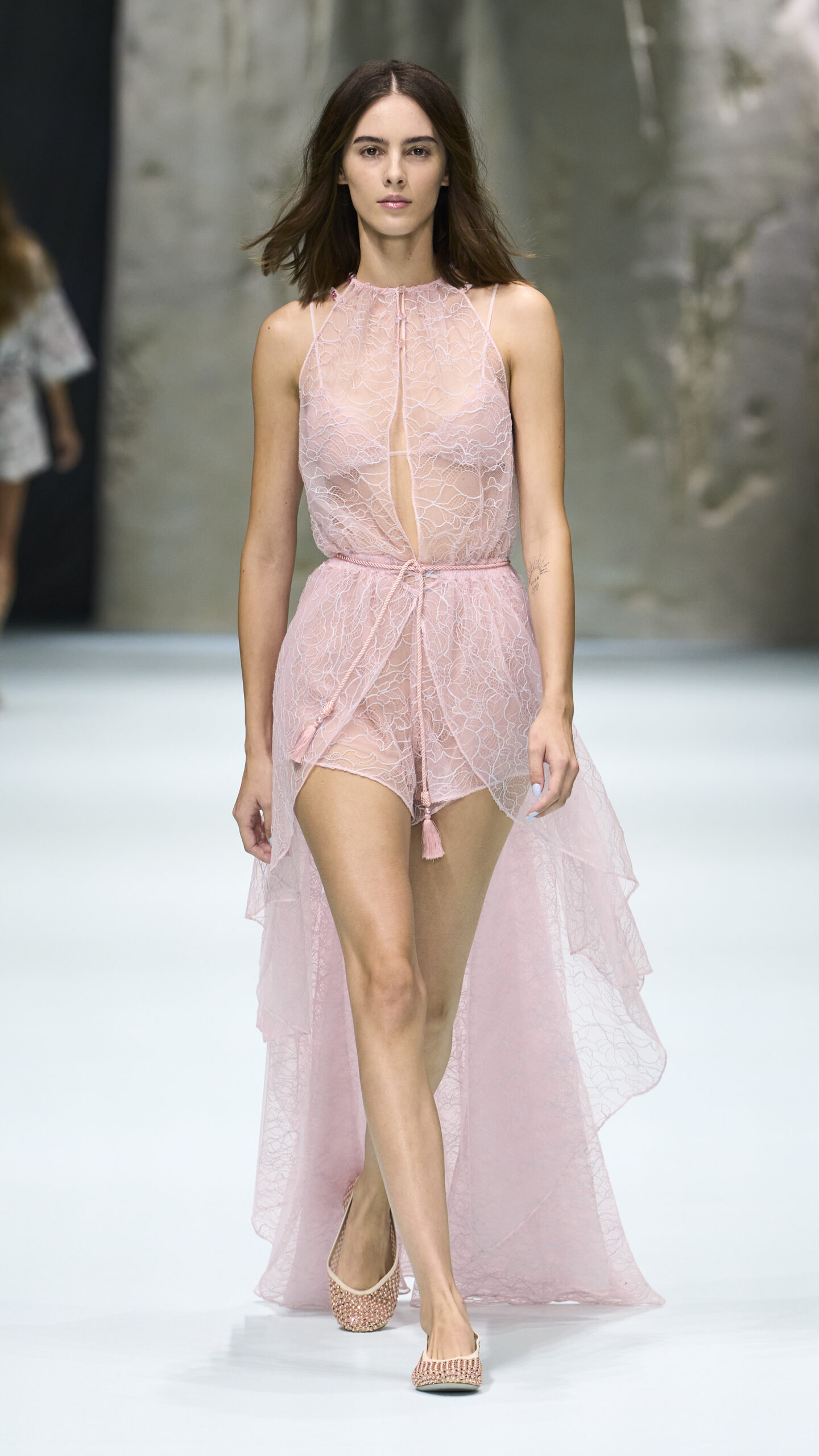
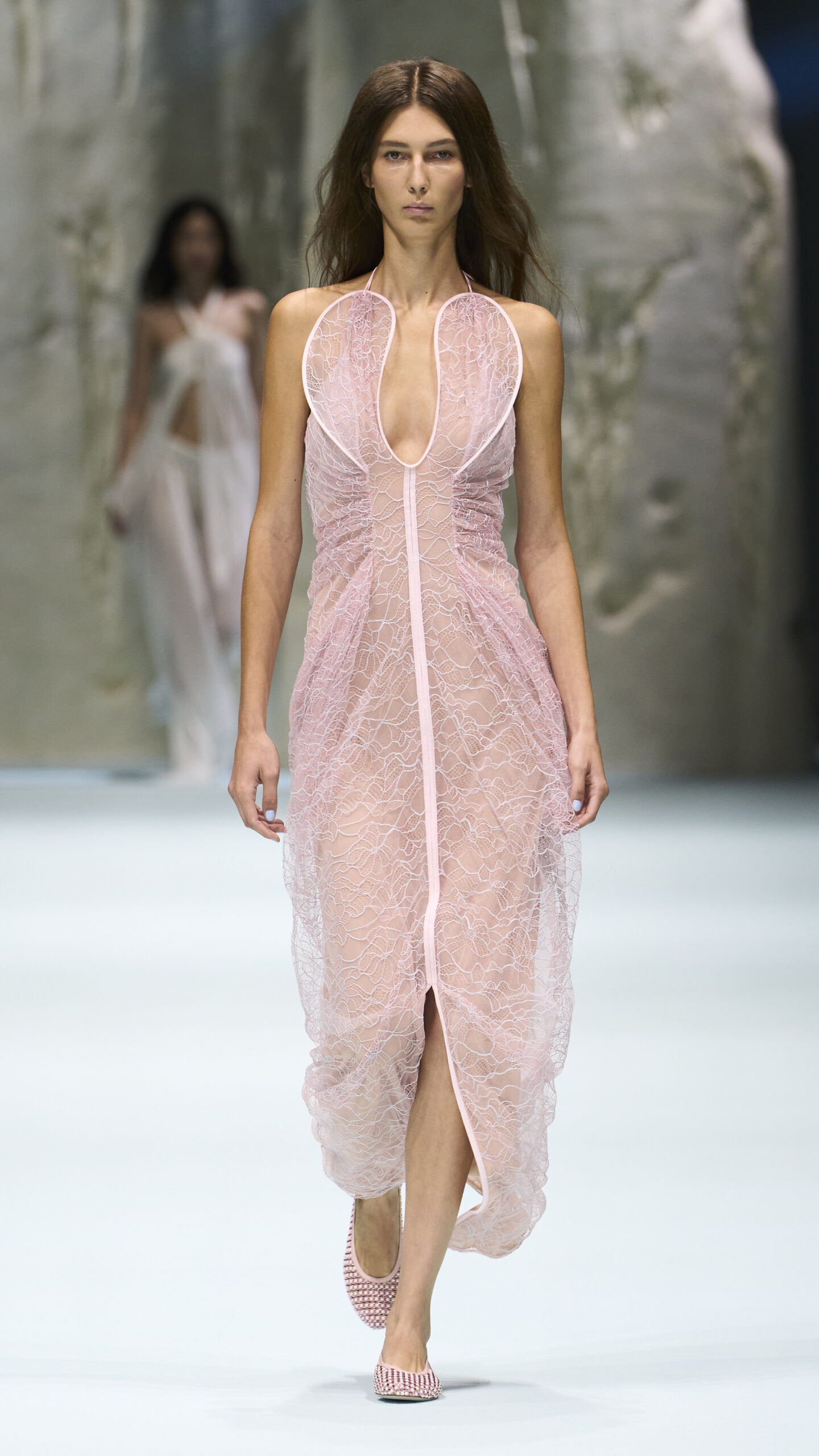
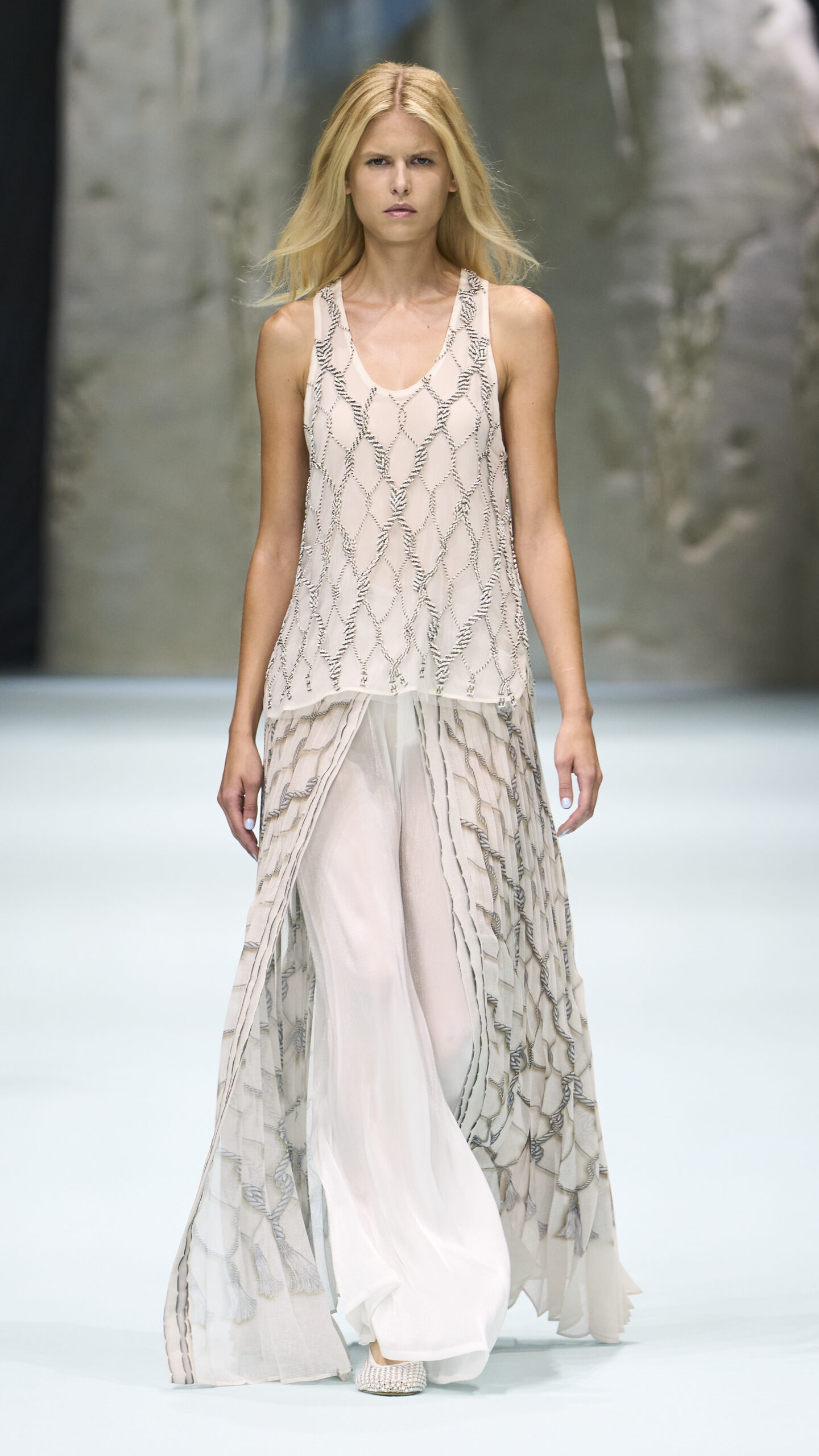
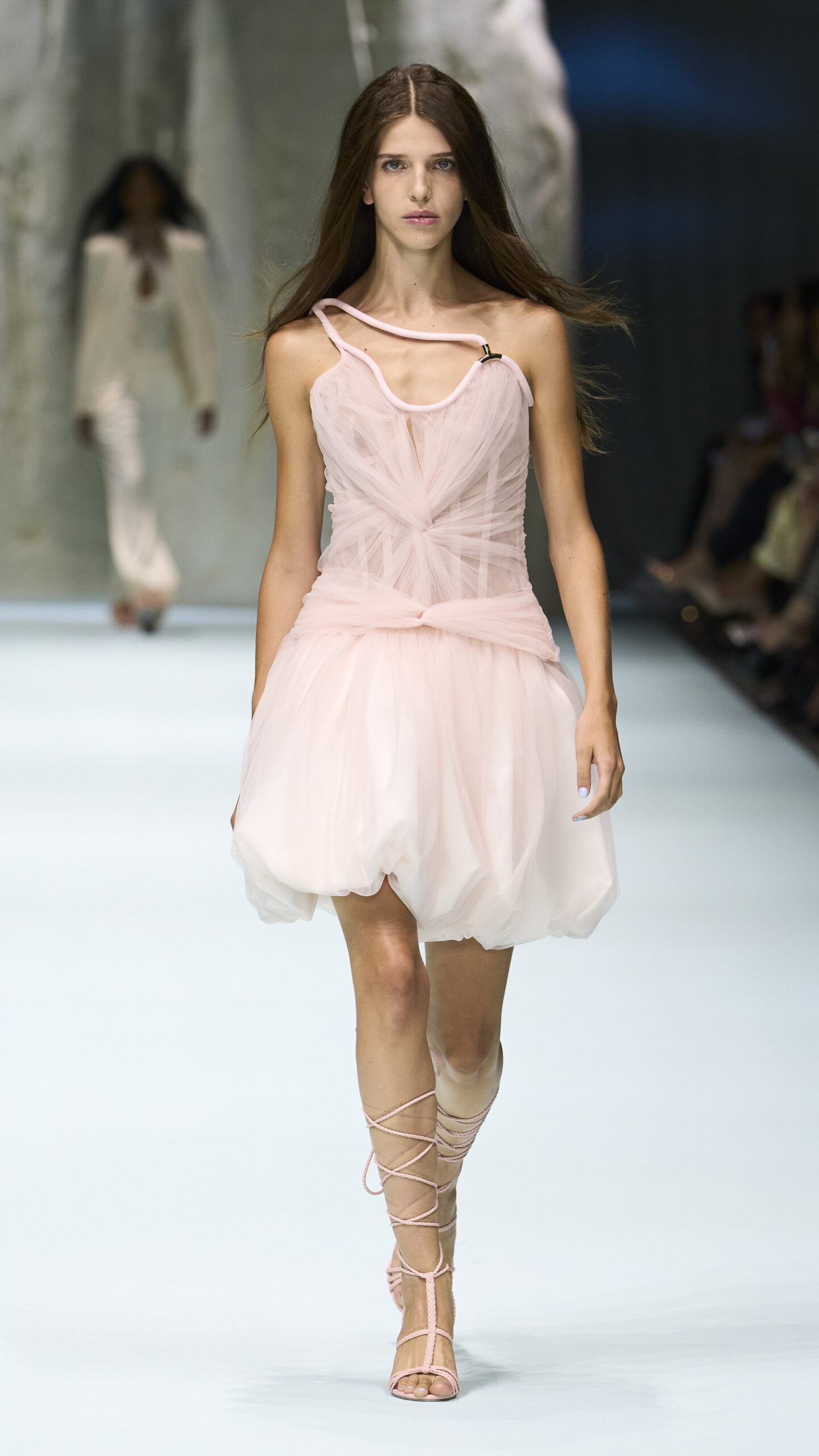
In some tulle dresses, slender body-following cords travel across the transparency, tracing the lines of the body.
They outline, redraw and recompose its forms, becoming structural elements that seem to shape a new silhouette, suspended between the real body and an imagined one.
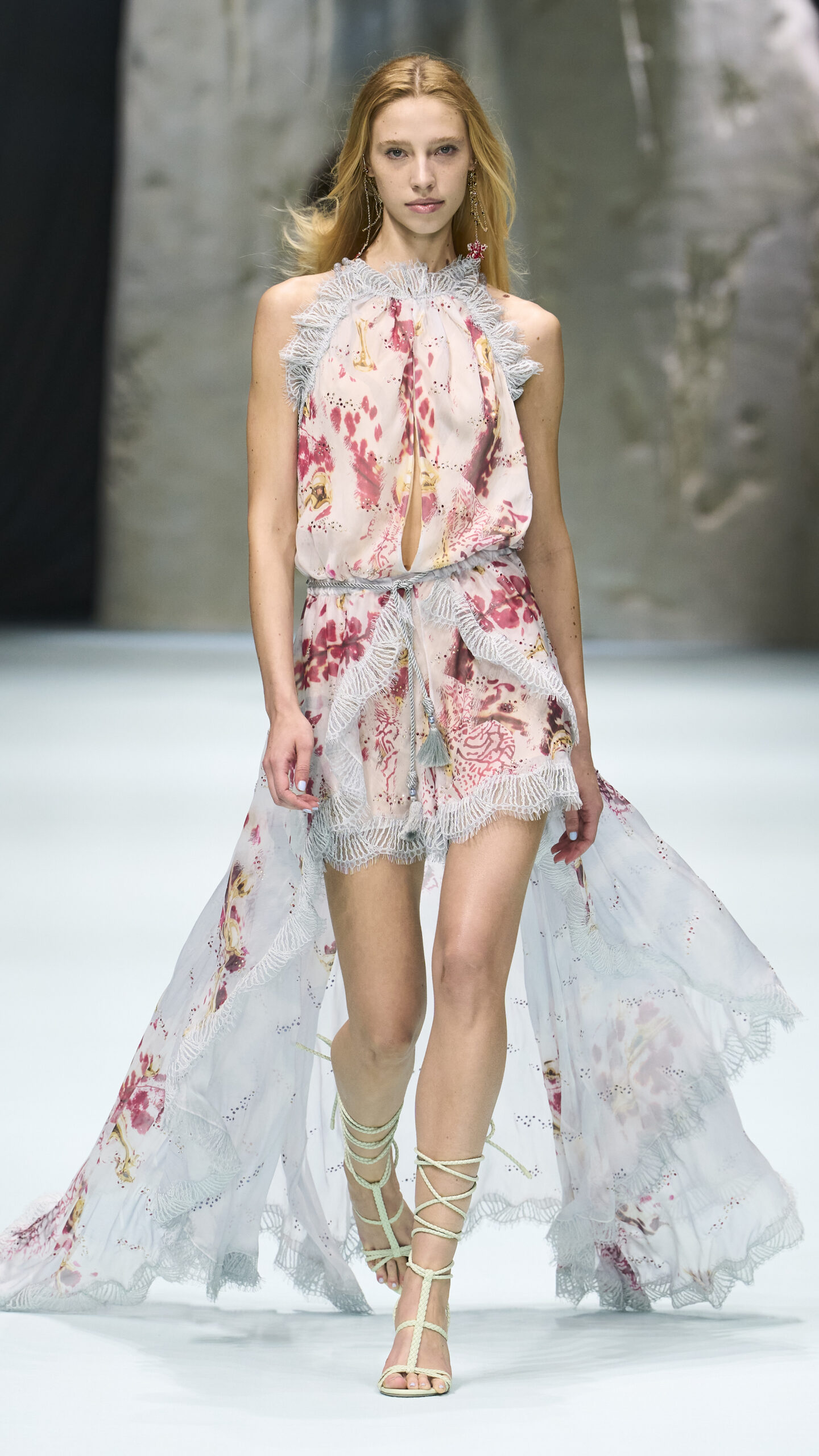
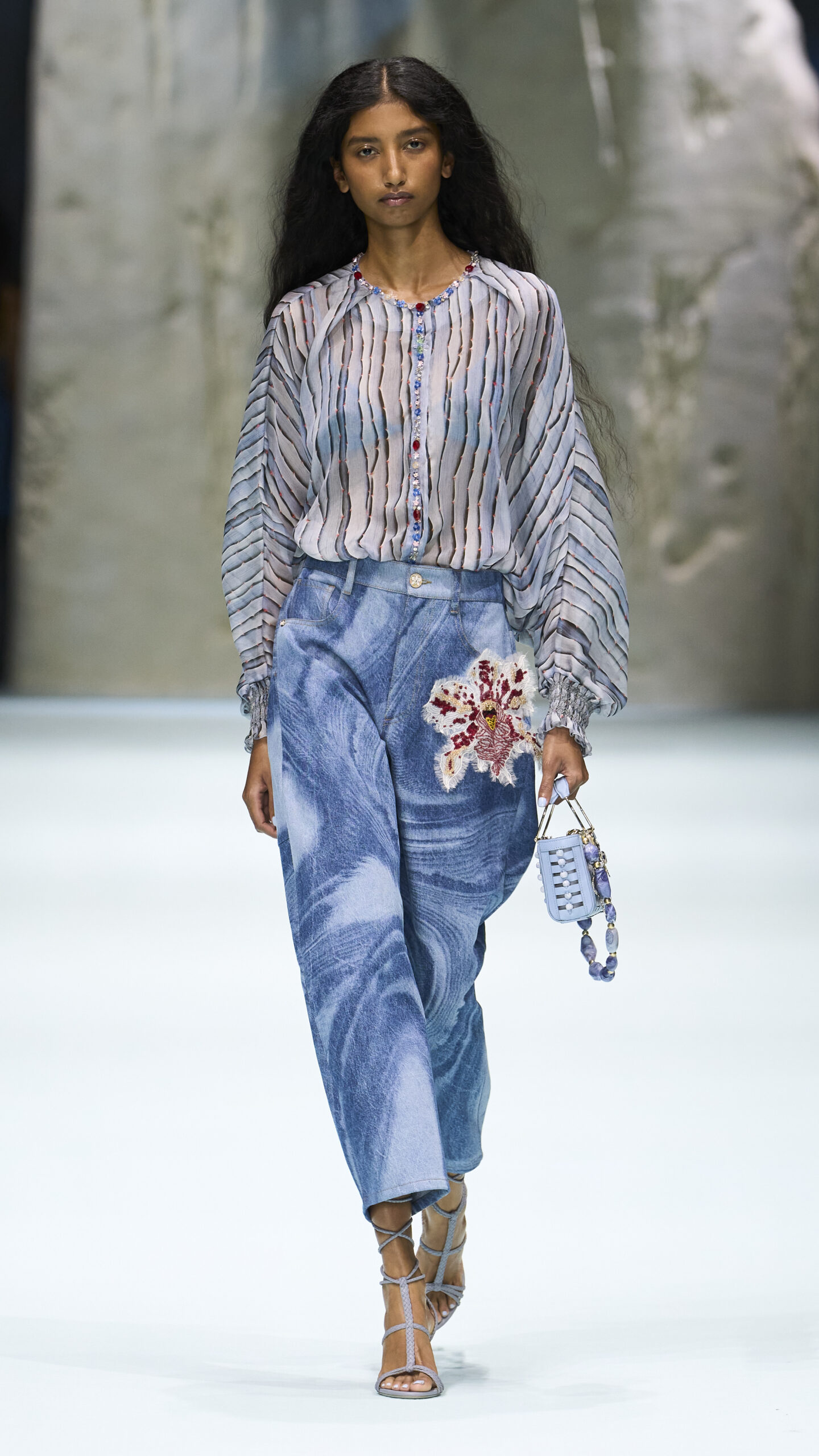
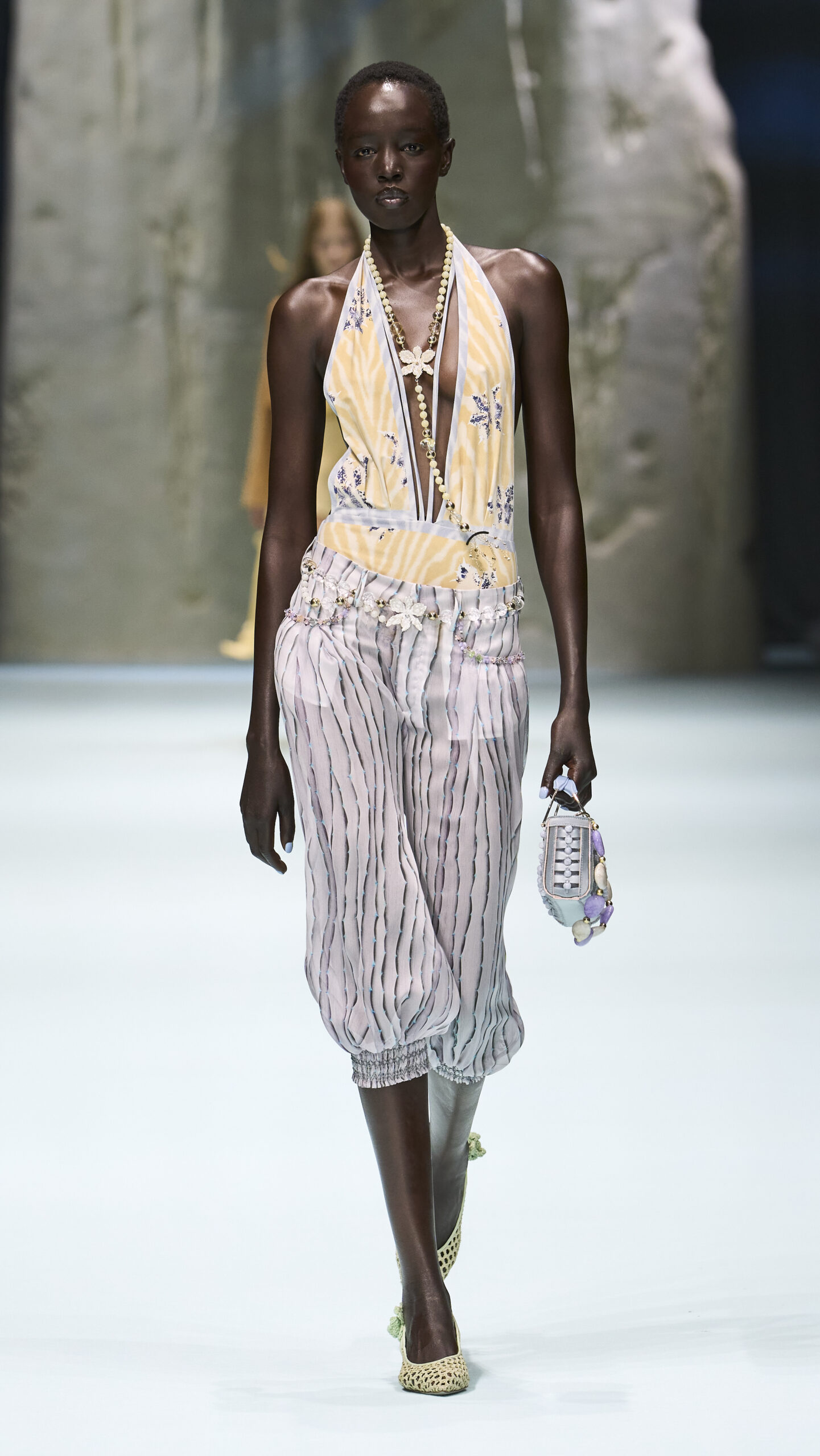
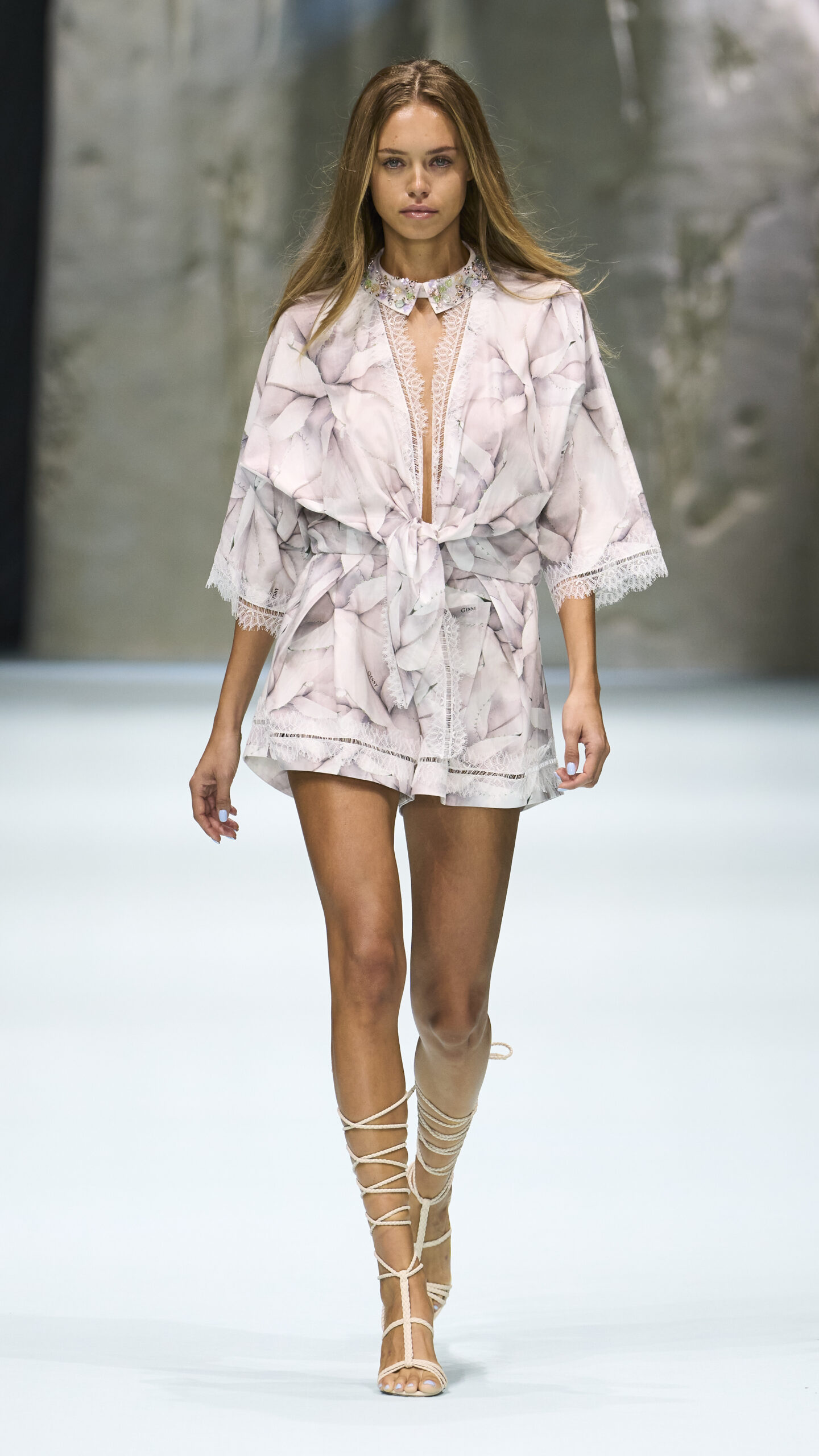
Ethnic influences emerge through the volumes of bloomer skirts and trousers. Agave-inspired prints meet delicate touches of lace and asymmetric dresses, while the orchid, a symbol of the Maison, blends with animal prints and also appears on special pieces in distressed denim.
Tulle, poplin, silk muslin, jersey and crêpe enhance the sense of fluidity and lightness that runs throughout the collection. Sabots, mules and slingbacks in woven leather, together with raffia bags featuring the orchid print, complete the story.
The Queen of the Desert is a woman aware of her femininity and her power of seduction: strong yet delicate, free to express herself through colour, texture and movement.
LA REGINA DEL DESERTO
Per la Spring Summer 2027, Sara Cavazza Facchini immagina per Genny un deserto come visione onirica, dove mondo animale, vegetale e minerale si incontrano, metafora di una femminilità contemporanea, resiliente e ricca di sfumature.
La collezione nasce dal desiderio di colore e leggerezza.
Il blu cobalto dei Tuareg si stempera in azzurri delicati, accanto alle tonalità della sabbia e dei tramonti, dal rosso al paprika, fino all’off-white delle atmosfere delle oasi. Il regno minerale trova ispirazione nei gioielli di Suzanne
Belperron e nel suo uso delle pietre dure, le cui profondità e sfumature diventano riferimento cromatico, soprattutto nella gamma dei blu.
La leggerezza attraversa le silhouette: le giacche hanno il peso di una camicia, mentre il foulard diventa elemento costruttivo di top e abiti eterei che si muovono intorno al corpo come sabbia nel vento. Le camicie si aprono in morbidi scolli cagoule, lasciando affiorare reggiseni in pizzo in un delicato gioco di sovrapposizioni e trasparenze.
Negli abiti di tulle, sottili cordoni body-following attraversano la trasparenza seguendo e ridisegnando le linee del corpo, come elementi di costruzione capaci di creare una nuova silhouette, sospesa tra corpo reale e immaginato.
Suggestioni etniche affiorano nei volumi di gonne e pantaloni bloomer. Stampe ispirate all’agave incontrano tocchi di pizzo e abiti asimmetrici, mentre l’orchidea, simbolo della Maison, si fonde con l’animalier e compare anche su capi speciali in denim dall’aspetto vissuto.
Tulle, popeline, mussola di seta, jersey e crêpe rafforzano la fluidità della collezione. Sabot, mules e slingback in pelle intrecciata, insieme alle borse in rafia con stampa orchidea, completano il racconto.
La Regina del Deserto è una donna consapevole della propria femminilità e capacità seduttiva: forte e delicata, libera di esprimersi attraverso colore, materia e movimento.